
How Does an Erection Happen?
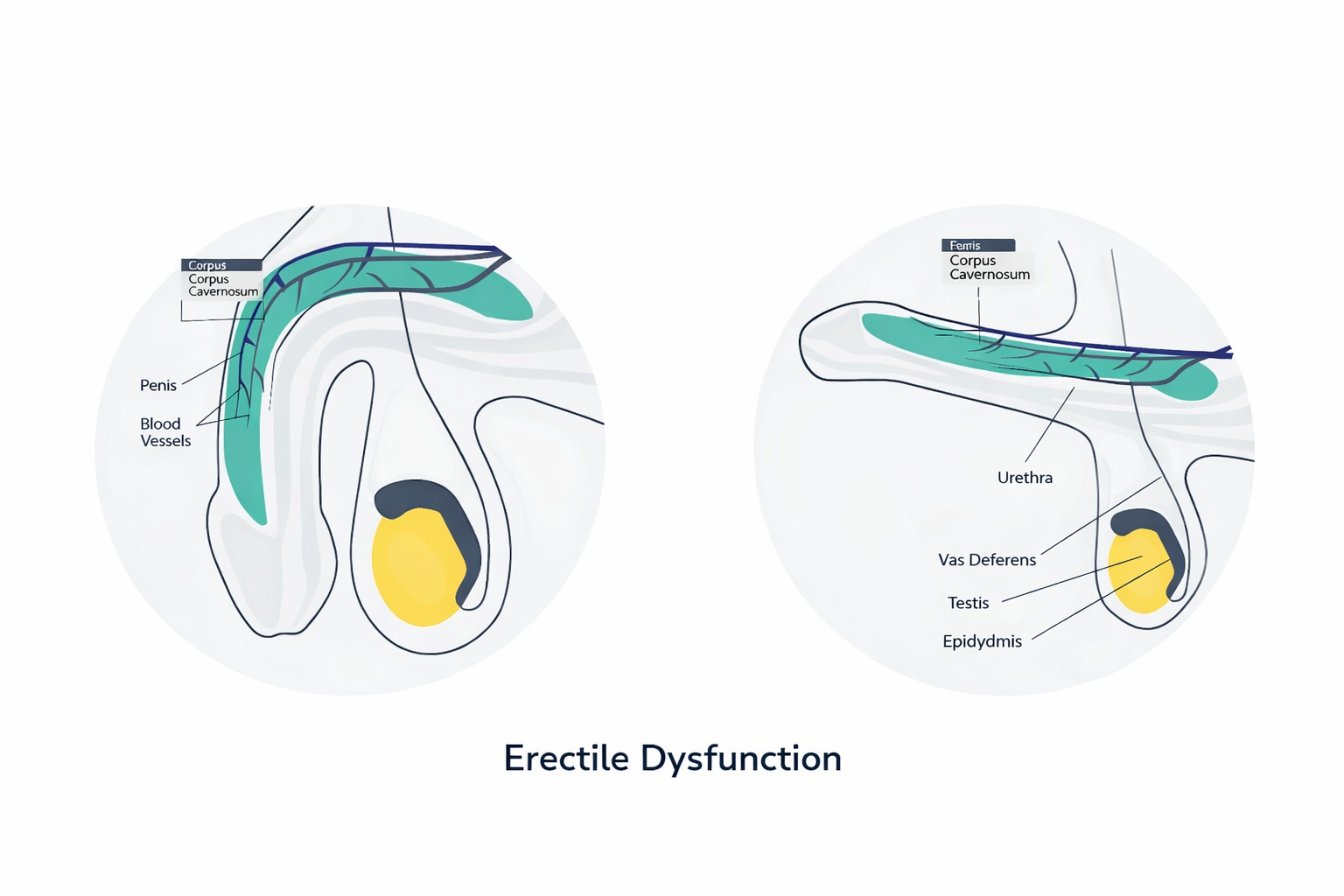
An erection occurs as a response to sexual stimulation, which can be physical, visual, or psychological. When sexual arousal begins, signals are sent from the brain through the nerves to the penis. These signals trigger the release of nitric oxide inside the penile tissues, which then leads to the production of cyclic guanosine monophosphate, known as cGMP.
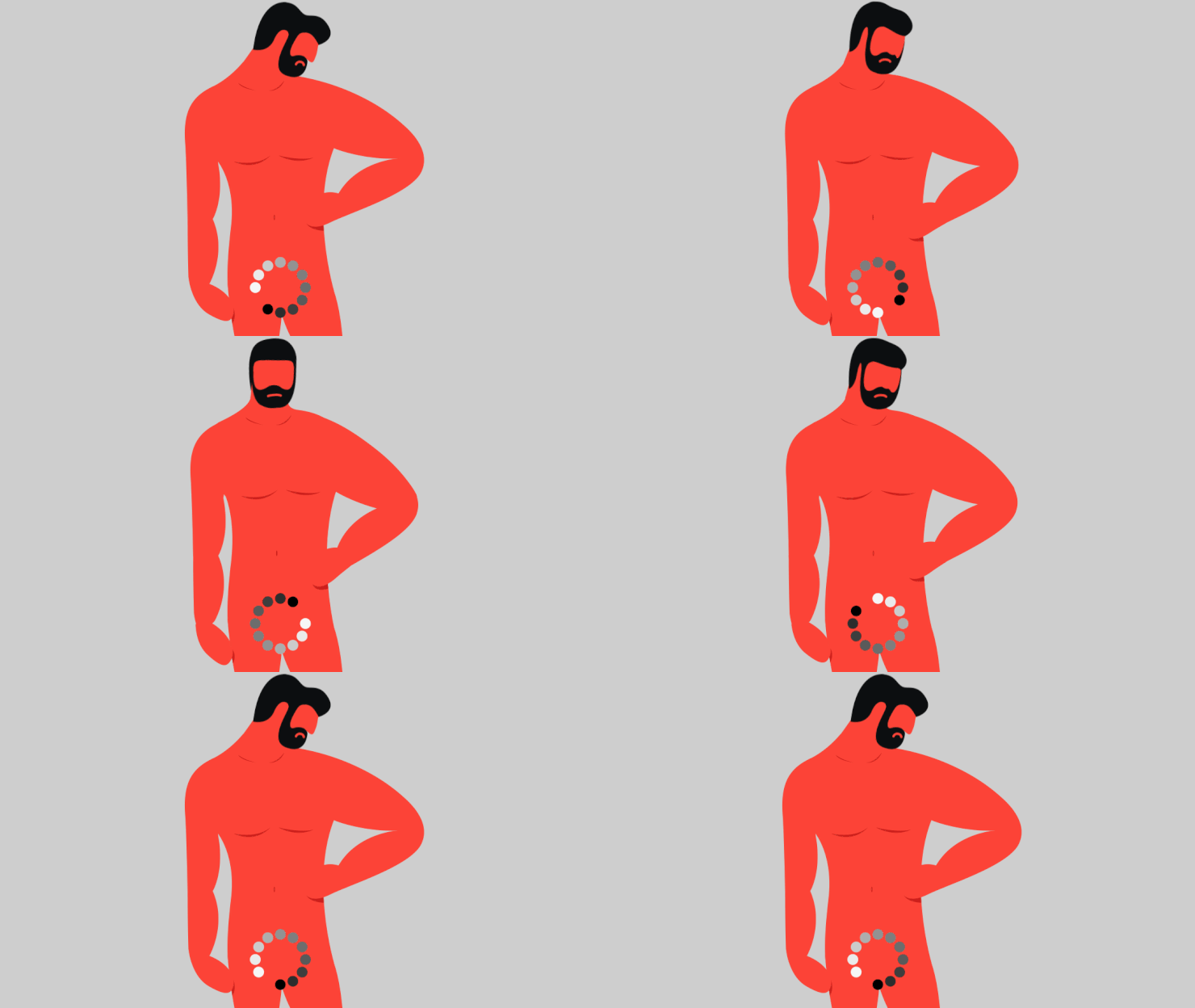
This process causes the smooth muscles within the penile blood vessels to relax, allowing a rapid increase in blood flow into the corpora cavernosa. As the penis fills with blood, it becomes firm and enlarged, resulting in an erection suitable for sexual activity.
After a certain period, or once stimulation decreases, cGMP levels naturally fall. The penile muscles contract again, blood flow reduces, and the penis returns to its flaccid state.
Even a small disruption at any stage of this process, whether vascular, neurological, hormonal, or psychological, can interfere with normal erections and lead to erectile dysfunction, which is why proper medical evaluation is essential when considering erectile dysfunction treatment in Turkey.
What Is Venous Leakage?
Venous leakage is a condition in which the veins of the penis are unable to retain blood during an erection. As a result, blood flows into the penis but escapes too quickly through the veins, making it difficult or impossible to maintain sufficient rigidity for sexual intercourse.
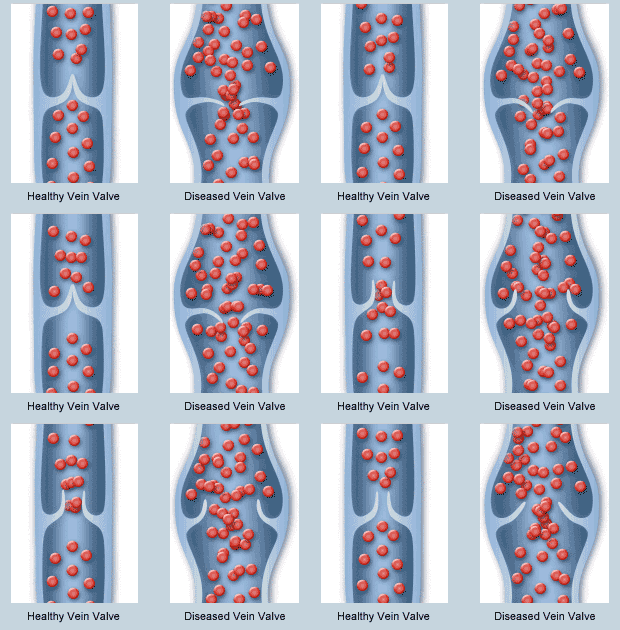
In a normal erection, the veins are compressed in a way that traps blood inside the penis. When this mechanism fails, the erection may start normally but gradually weakens or disappears. For many men, this leads to frustration, inconsistent results, and a poor response to standard erectile dysfunction medications.
Common signs of venous leakage include persistent erectile dysfunction with or without a partner, a noticeable loss of morning erections, reduced quality of spontaneous erections, and little or no benefit from oral medications or other conventional treatments.
Venous leakage is one of the most frequent reasons why treatments such as tablets or injections fail, which is why a structured diagnostic approach is essential when considering erectile dysfunction treatment in Turkey.
Causes of Venous Leakage
The primary cause of venous leakage is insufficient constriction of the penile veins during sexual arousal. When the veins fail to compress properly, blood escapes from the penis too quickly, preventing the erection from being maintained.
Several medical conditions can contribute to this mechanism failure. Diabetes and high cholesterol can damage blood vessels and reduce their ability to function normally. Peyronie’s disease may alter the structure of the penile tissues, affecting venous control. Low testosterone levels can also weaken the erectile process by reducing tissue health and responsiveness.
Lifestyle factors play a role as well. Chronic stress, anxiety, and depression can worsen venous leakage by interfering with normal nerve signaling. Smoking and exposure to excessive chemicals may further impair vascular and smooth muscle function within the penis.
In some cases, structural changes inside the penis are responsible. These may include reduced smooth muscle content or abnormalities within the corpora cavernosa, which limit the penis’s ability to trap blood effectively during an erection and influence the choice of erectile dysfunction treatment in Turkey.
Diagnosis of Venous Leakage
Diagnosing venous leakage requires a structured medical evaluation to determine both the presence and severity of the condition. The goal is not only to confirm the diagnosis but also to identify any associated medical problems that may be contributing to erectile dysfunction.
The first step is a general clinical assessment. This includes reviewing the patient’s medical history and checking for conditions such as diabetes, cardiovascular disease, neurological disorders, or Peyronie’s disease, which are commonly linked to venous leakage.
Penile Doppler ultrasound is one of the most important diagnostic tools. It allows the physician to assess blood flow within the penile vessels and evaluate how well blood is retained during an induced erection. This test provides valuable information about arterial inflow and venous outflow.
In some cases, additional tests may be used to measure penile blood pressure or further assess vascular function. These evaluations help guide treatment decisions and ensure that the chosen therapy is appropriate for the patient’s specific condition when planning erectile dysfunction treatment in Turkey.
How We Decide the Right Treatment
Choosing the right erectile dysfunction treatment in Turkey is not based on symptoms alone. At Istanbul Urology Clinic, treatment decisions are made after a structured medical evaluation that focuses on identifying the exact cause and severity of the condition.
The process begins with a detailed clinical assessment, which includes a medical history, physical examination, and, when necessary, a Penile Doppler Ultrasound and hormonal evaluation. These steps help determine whether erectile dysfunction is mild, moderate, or severe, and whether conditions such as venous leakage, vascular disease, or hormonal imbalance are present.
Treatment is then selected based on objective findings rather than trial and error. Non-surgical and regenerative options may be recommended for early or moderate cases, while advanced or surgical solutions are reserved for situations in which the erectile mechanism is permanently compromised.
Treatment outcomes depend on the underlying cause and disease stage, and no single solution fits all patients.
Venous Leakage Treatment
The treatment of venous leakage depends on the severity of the condition and how early it is diagnosed. In mild or early cases, conservative and regenerative approaches may help improve erectile function and slow disease progression.
In selected patients with minimal venous leakage or those who seek medical evaluation at an early stage, stem cell therapy may offer benefit. In these cases, regenerative treatment can help improve tissue quality and vascular function before the condition progresses further. However, this option is only suitable for carefully selected cases and cannot correct advanced mechanical failure of venous occlusion.
Medications aimed at improving erectile function and hormonal balance may be used as supportive treatment, although their effectiveness is often limited when venous leakage is present. Non-surgical options such as vacuum devices or local penile injections can also provide temporary improvement but do not address the underlying cause.
For moderate to severe cases, certain surgical techniques aimed at vascular reconstruction or venous repair may be considered. While these procedures can show short-term improvement in selected patients, long-term results are often unpredictable, and recurrence of venous leakage is common.
For this reason, in advanced cases of venous leakage, penile implant surgery is usually the most reliable and definitive solution. By bypassing the faulty venous mechanism entirely, penile implants provide consistent results and long-term patient satisfaction when other treatment options have failed within the context of erectile dysfunction treatment in Turkey.
Non-Surgical Erectile Dysfunction Treatments
In some cases, erectile dysfunction can be managed without surgery, particularly in mild or early stages. Treatment outcomes depend on the underlying cause and disease stage, and no single solution fits all patients.
Oral medications, such as sildenafil or tadalafil, are commonly used, but they are not encouraged as a long-term solution without proper medical supervision. These medications may cause side effects, and unsupervised or frequent use can sometimes worsen the underlying condition rather than treat it, which is why proper evaluation is important when considering erectile dysfunction treatment in Turkey.

Lifestyle modification remains an essential supportive step. Regular exercise, smoking cessation, weight control, and managing chronic conditions such as diabetes or high blood pressure can help improve overall vascular health, but lifestyle changes alone are often insufficient in moderate or advanced cases.
Vacuum erection devices: can assist in achieving an erection mechanically, but they do not treat the underlying cause of erectile dysfunction. For this reason, they are not considered a definitive solution and are usually viewed as a temporary aid.
Local penile injections can induce erections by acting directly on penile tissues. While effective in selected cases, repeated use over time may lead to fibrosis within the penis. Therefore, injections are not encouraged as a long-term treatment strategy.
For these reasons, non-surgical treatments should always be considered carefully and used only under proper medical guidance, with a clear understanding of their limitations.
Erectile Dysfunction Treatment in Turkey
Erectile dysfunction treatment in Turkey has become a well-known option, offering modern medical technology, experienced specialists, and structured treatment pathways tailored to each patient’s condition.
At Istanbul Urology Clinic, treatment is never approached as a one-size-fits-all solution. Every patient undergoes a proper clinical evaluation to determine the cause and severity of erectile dysfunction before any treatment is recommended. This allows the medical team to select the most effective option, whether non-surgical, regenerative, or surgical, based on medical necessity rather than assumptions.
One of the main advantages of erectile dysfunction treatment in Turkey is access to a wide range of therapies within a single center. This ensures continuity of care, accurate follow-up, and realistic expectations regarding outcomes, recovery, and long-term results.
PRP (P-Shot) Therapy
Platelet-rich plasma, commonly known as PRP, is a treatment derived from the patient’s own blood. After a simple blood draw, the sample is processed to separate plasma rich in platelets and growth factors, which play a role in tissue repair and regeneration.

As part of erectile dysfunction treatment in Turkey, PRP injections are used as a non-surgical supportive approach aimed at improving blood flow and enhancing nerve and tissue health through natural regenerative processes.
In some cases, PRP may help enhance erectile quality, particularly in men with mild erectile dysfunction or early vascular changes. However, PRP should not be viewed as a standalone solution for severe erectile dysfunction or advanced venous leakage. Its role is mainly adjunctive, and results can vary depending on the underlying cause and the patient’s overall health.
Because PRP uses the patient’s own blood components, it is generally considered safe. Still, proper patient selection and realistic expectations are essential to achieve meaningful results.
Shockwave Therapy
Shockwave therapy, also known as low-intensity extracorporeal shockwave therapy, is a non-invasive treatment designed to improve blood flow within the penile tissues. It works by delivering controlled acoustic waves that stimulate the formation of new blood vessels and enhance vascular function.

This therapy is considered a complementary treatment rather than a standalone solution. In most cases, shockwave therapy is used alongside other non-surgical options to enhance overall results, particularly regenerative treatments such as PRP injections or stem cell therapy within a structured erectile dysfunction treatment in Turkey approach.
By improving circulation and tissue responsiveness, shockwave therapy can support the effects of these treatments and help selected patients achieve better erectile quality. However, on its own, it is usually not sufficient to treat moderate to severe erectile dysfunction or advanced venous leakage.
For this reason, shockwave therapy is best viewed as part of a comprehensive treatment plan tailored to the patient’s condition rather than a single, definitive therapy
Stem Cell Treatment
Stem cell therapy is a modern regenerative approach aimed at improving vascular and tissue health within the penis. There are two main sources of stem cells used in erectile dysfunction treatment, and the choice depends on the patient’s condition and medical indication.

The first type involves autologous stem cells, which are obtained from the patient’s own fat tissue, usually from the abdominal area. These cells are processed and then injected into specific areas of the penis. Because the cells come from the patient’s own body, this method is considered very safe and well tolerated.
The second type involves previously prepared stem cell products, which are derived from placental tissue and processed under strict medical standards. These cells are not taken from the patient directly but are carefully prepared to ensure safety and biological activity.
From a clinical perspective, both approaches aim to support tissue regeneration, improve blood flow, and enhance erectile function. In properly selected patients, outcomes can be comparable, especially in early to moderate erectile dysfunction or mild venous leakage. However, the response to treatment depends more on the underlying condition and disease stage than on the cell source itself when planning erectile dysfunction treatment in Turkey.
Stem cell therapy is minimally invasive and does not require general anesthesia. Improvement usually occurs gradually over several weeks, with results continuing to develop over the following months. While this treatment can be beneficial in selected cases, it is not a definitive solution for advanced erectile dysfunction and is often used as part of a broader, non-surgical treatment strategy.
Penile Implant Surgery
Penile implant surgery is considered the most definitive treatment for men with severe erectile dysfunction who do not respond to non-surgical or regenerative therapies. This option is usually recommended when the erectile mechanism is permanently compromised, such as in advanced venous leakage, long-standing diabetes, or after prostate surgery.
There are two main types of penile implants:
- Malleable penile implant
This type consists of flexible rods that provide constant firmness. The penis can be positioned manually for sexual activity and returned to a concealed position afterward. It is a reliable option with a simpler mechanical structure.
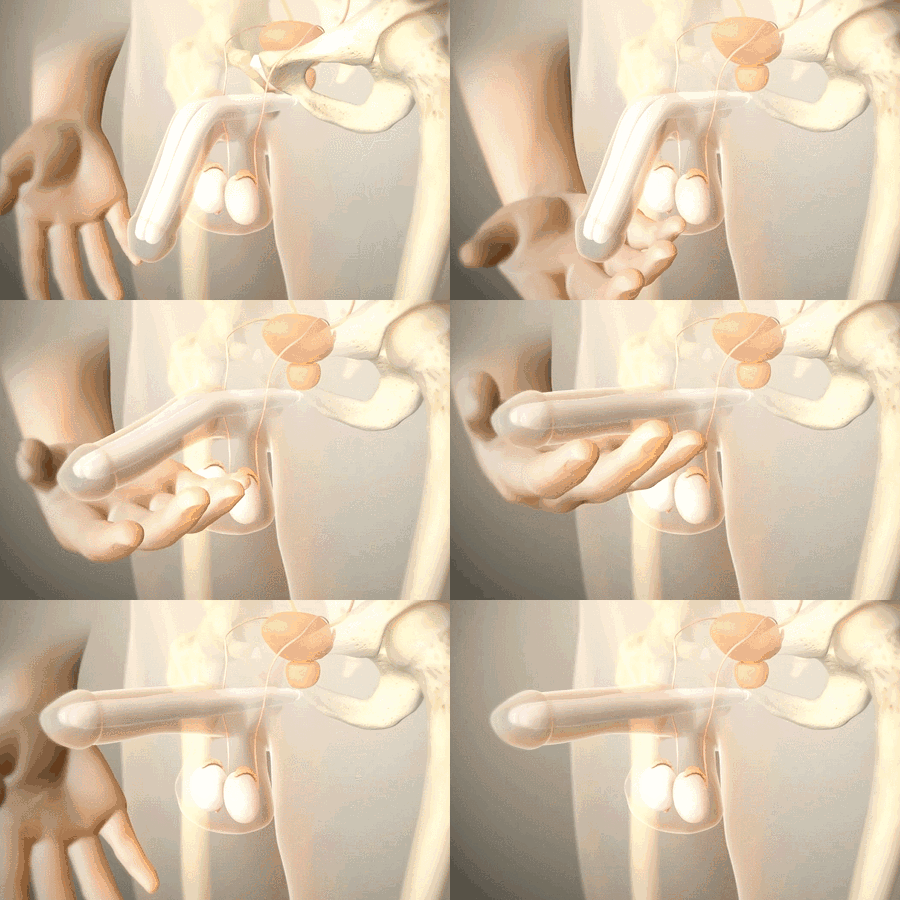
It is commonly recommended for patients with neurological or muscular conditions, as well as for men over the age of seventy, where ease of use, durability, and a low risk of mechanical failure are important considerations.
- Inflatable penile implant ( Hydraulic )
This implant allows the penis to remain flaccid at rest and become erect only when activated through a discreet pump placed in the scrotum.
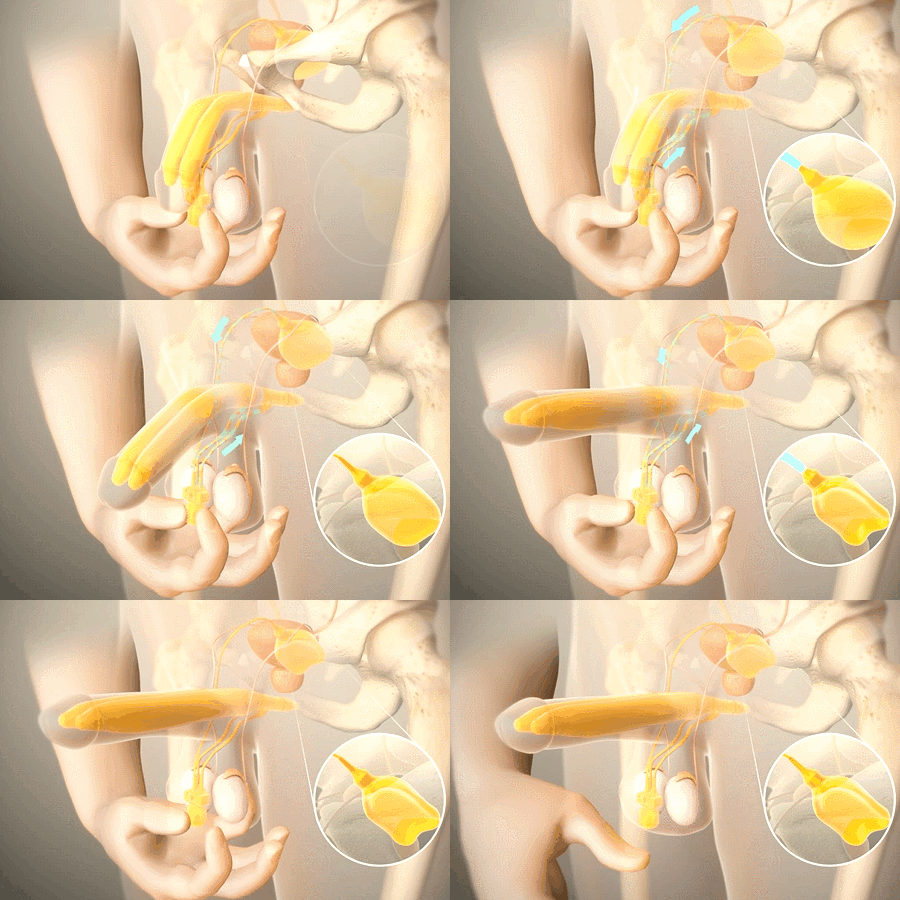
Within inflatable implants, there are different models available, Implants that increase girth only, and the More advanced implants designed to expand in both length and girth over time with regular use, offering a more natural erection and higher patient satisfaction
The procedure does not replace natural penile tissue but provides reliable rigidity by placing medical-grade cylinders inside the corpora cavernosa. Penile implant surgery has been performed for several decades and is associated with high satisfaction rates when patients are properly selected and fully informed.
At Istanbul Urology Clinic, we provide all types of penile implants, including approved American and European devices (Rigicon – AMS 700 – Coloplast ), allowing treatment to be tailored to each patient’s anatomical needs and medical condition.


Leave a Reply