
Last updated: June 11, 2026

What Is Varicocele? Symptoms, Causes & Treatment Explained

Medically reviewed by:

Prof. Dr. Ö. Onuk

Professor of Andrology

21 min read
Copy link
Varicocele (Testicular Varicose Veins)

Most men hear the word varicocele for the first time in one of two places: a fertility consultation, or a routine check-up they booked for something else. It is one of the more common findings in urology, and for many patients it raises more questions than it answers.

The presentation is not the same in every man. Some notice a dull heaviness in the scrotum that builds through the day and is worse after long periods of standing. Others feel nothing at all, and the condition is only discovered when a urologist examines them or when a semen analysis comes back abnormal during fertility testing.

Varicocele is not a dangerous condition. Many cases do not need treatment. When treatment is appropriate, the options are well established and the outcomes are good.

This guide explains what varicocele is, why it develops, how it is diagnosed, and when treatment becomes necessary. It is written for patients who want a clear, complete picture of the condition before deciding what to do next.

Key Points

  • Varicocele is the enlargement of veins inside the scrotum surrounding the testicle.
  • It affects approximately 15% of men overall and up to 40% of men investigated for fertility problems.
  • Many men have no symptoms. Others experience scrotal heaviness or mild testicular discomfort, particularly after prolonged standing.
  • Varicocele is more common on the left side, a direct consequence of left testicular vein anatomy.
  • Diagnosis is established through physical examination and scrotal Doppler ultrasound.
  • Treatment options include observation, microsurgical repair, or embolization, depending on symptoms and clinical findings.

What Is a Varicocele?

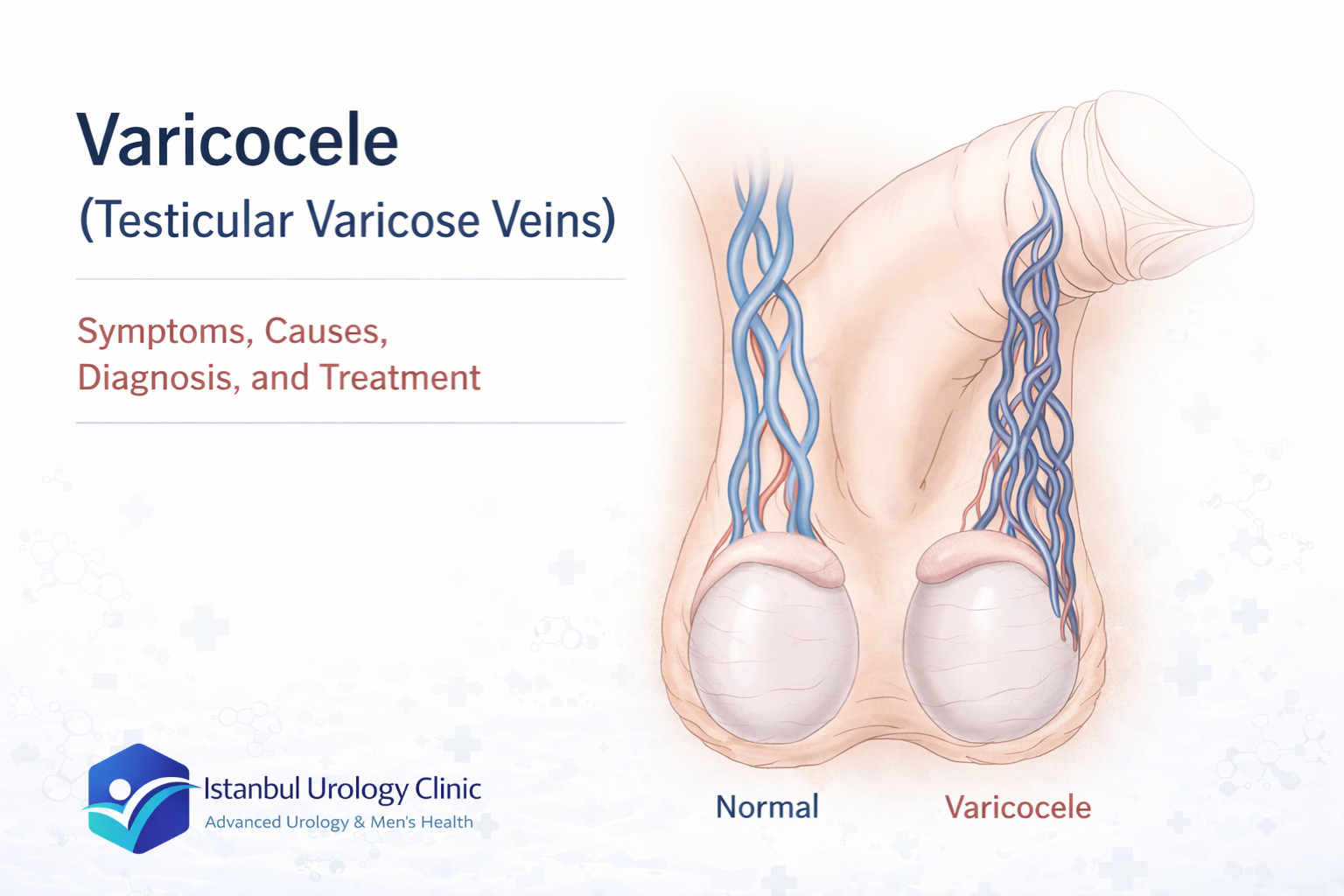
A varicocele is an abnormal enlargement of the veins inside the scrotum that drain blood away from the testicle.When those veins stop functioning correctly, blood pools inside them instead of moving efficiently upward.Over time, the pooling causes the veins to dilate and swell, creating the condition known as varicocele.Picture backgroundThe mechanism is the same as varicose veins in the legs: blood collects, pressure builds, and the vessel wall stretches.In some men, the enlarged veins are visible or palpable through the scrotal skin.
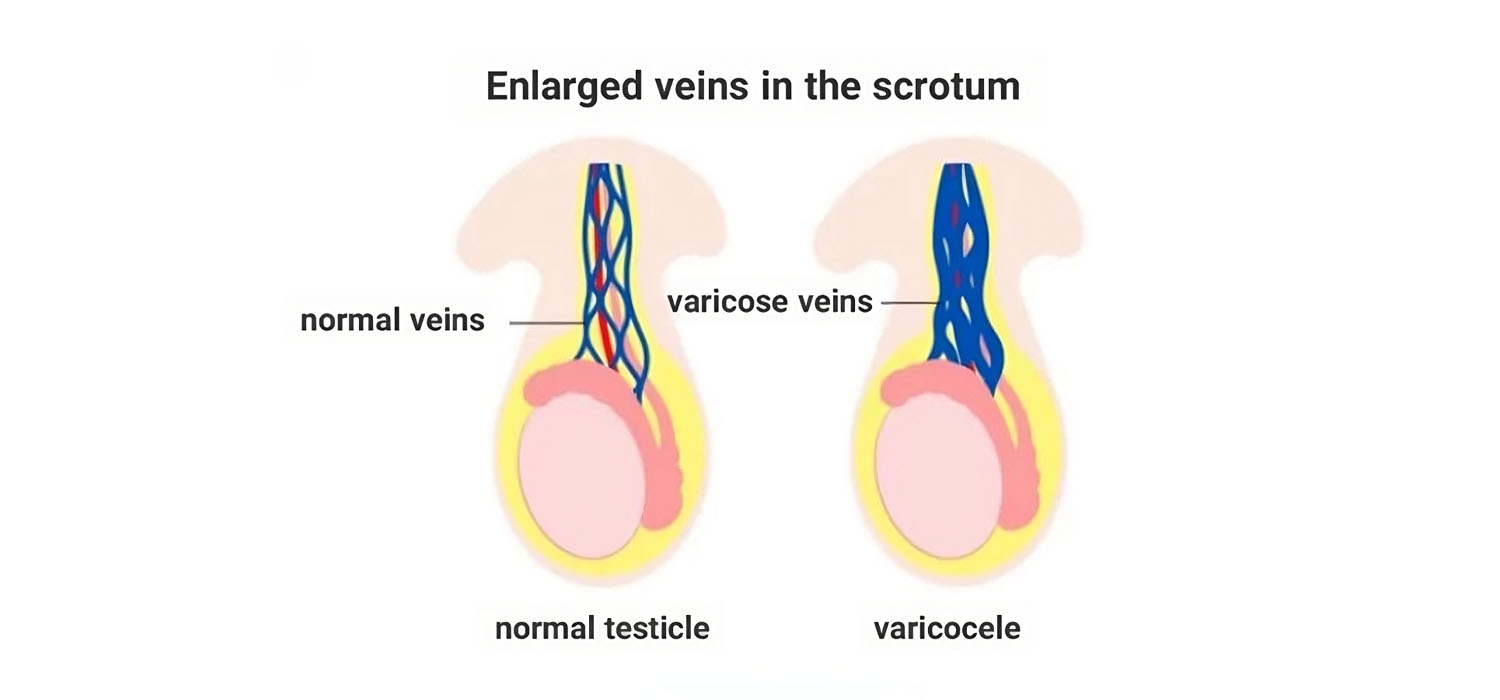
In others, they are small enough that only a Doppler ultrasound or physical examination by a urologist will detect them. Symptoms vary just as widely.

Many men with varicocele feel nothing at all. 
Others notice a dull heaviness in the testicle that builds through the day and is worse after prolonged standing. The next section covers why varicoceles develop and why some men are more prone to them than others.

Why Does Varicocele Occur?

Varicocele develops when the small one-way valves inside the testicular veins fail to do their job. These valves normally keep blood moving upward, away from the testicle and back toward the heart. When a valve weakens, blood reverses direction and begins to pool in the veins around the testicle. Over time, that pooling stretches the vein walls and produces the dilation that defines varicocele.Picture background
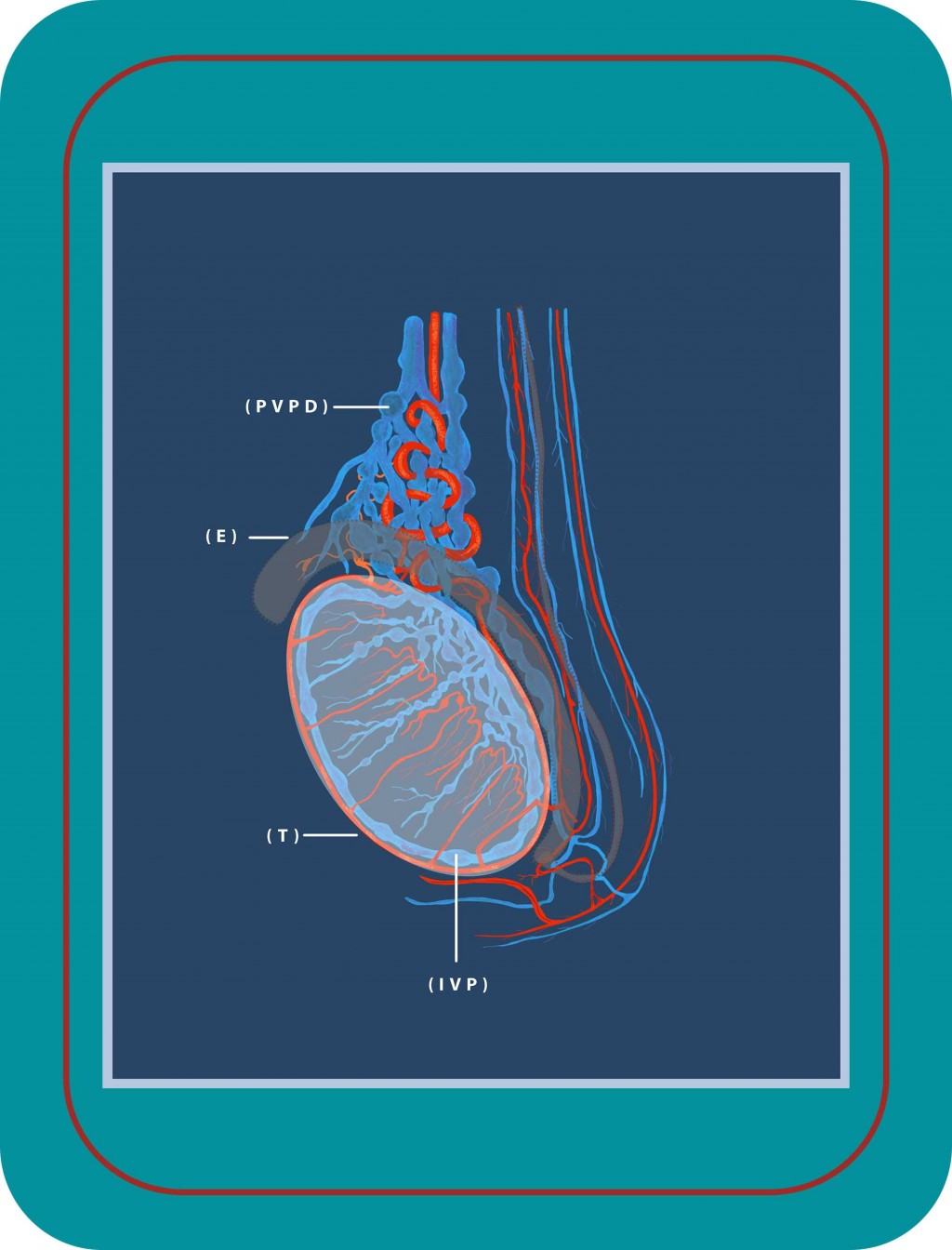
The mechanism is the same as varicose veins in the legs: blood collects, pressure builds, and the vessel wall stretches. The difference with varicocele is where it happens and why the left side is so disproportionately affected.

Why the Left Side Is Affected in 80 to 90% of Cases

Around 80 to 90% of varicoceles occur on the left side, and the reason comes down to anatomy.

The left testicular vein drains into the left renal vein at nearly a right angle. The right testicular vein, by contrast, drains directly into the inferior vena cava at a gentler angle and with lower resistance. That single difference in drainage geometry means blood has to work harder to leave the left testicle, and when valve function weakens, the left side is where pooling shows up first.

Bilateral varicocele (affecting both sides) is possible but less common. Isolated right-sided varicocele is uncommon enough that when it appears in an adult patient, it warrants additional investigation to rule out an underlying cause in the abdomen or kidney.

What Makes Varicocele More Likely

Two factors increase the chance of valve failure and venous pooling:

  • Puberty and rapid growth. The testicles grow quickly during adolescence and blood flow to the area increases significantly. This is the period when most varicoceles first develop, and it is also why the condition is sometimes found incidentally during routine examinations in teenagers with no complaints.
  • Increased abdominal pressure. Anything that raises pressure in the abdomen can compound the problem: chronic heavy lifting, prolonged standing, and certain occupations that involve sustained physical strain.

The condition is also frequently discovered during fertility investigations, since impaired testicular drainage affects the temperature and hormonal environment the testicle needs to produce healthy sperm.

How Common Is Varicocele in Men?

Varicocele is common.
It affects approximately 15% of men in the general population, making it one of the most frequently diagnosed scrotal conditions in adolescents and adult men.
Among men investigated for infertility, that figure rises substantially, with varicocele identified in 30% to 40% of cases.
The condition most often develops during puberty, when the testicles grow rapidly and blood flow to the area increases significantly.
This is why varicocele is sometimes found incidentally during routine examinations in teenagers who had no complaints at all.
Having a varicocele does not mean something is seriously wrong.
Many men have mild varicoceles that cause no symptoms and no impact on fertility, and the condition would never have been identified without a medical examination for another reason.
Whether treatment is needed depends on what the varicocele is actually doing, not simply on its presence.

Varicocele Grades

Not all varicoceles are the same, and the difference between them matters clinically. Varicoceles are classified into grades based on the size of the enlarged veins and how readily they are detected on examination. The grade helps determine how significant the condition is and whether treatment is warranted.
← Swipe to see full table →
Grade Description How It Is Detected
Grade 1 Small varicocele, not visible and not palpable under normal conditions Detected only when the patient performs the Valsalva maneuver, which increases abdominal pressure and makes the reflux apparent
Grade 2 Moderate varicocele that cannot be seen but can be felt on direct examination Palpable without requiring the Valsalva maneuver
Grade 3 Large varicocele visible through the scrotal skin without any physical maneuver Visible to the eye and immediately palpable on examination

In general, higher grades of varicocele are more likely to cause noticeable symptoms such as discomfort or heaviness in the testicle. In some cases, they may also have a greater impact on fertility. However, treatment decisions are not based on the grade alone, but also on symptoms, examination findings, and individual patient evaluation.

Higher-grade varicoceles are more likely to produce noticeable symptoms: scrotal heaviness, dull testicular discomfort, or a visible bulge.

They are also more likely to affect fertility, though the relationship is not absolute.

Grade alone does not determine whether treatment is needed.
The decision is based on the full clinical picture: symptoms, examination findings, fertility status, and the individual patient’s situation.

Can Varicocele Cause Testicular Shrinkage?

When varicocele develops during adolescence, it can interfere with normal testicular growth.Picture backgroundBlood pooling in the dilated veins raises the local temperature and disrupts the hormonal environment the developing testicle depends on.Over time, this can result in a measurable size difference between the two testicles, with the affected side growing more slowly or showing signs of reduced volume.

For this reason, varicocele diagnosed in teenagers is monitored carefully.
Measuring testicular volume on both sides at regular intervals allows the urologist to track whether normal growth is continuing or whether the varicocele is having a progressive effect.

If a size difference begins to develop or worsens between appointments, treatment may be recommended to protect long-term testicular function before the damage becomes permanent.

Varicocele Symptoms

Symptoms vary widely between patients. Many men with varicocele feel nothing at all. Others experience discomfort that builds through the day, and a smaller group present with visible changes or fertility concerns. The table below summarises the four main ways varicocele shows up.

← Swipe to see full table →
Symptom TypeWhat Patients NoticeWhen It Appears
Testicular Pain or HeavinessDull ache or heaviness in the affected testicle. Lying down brings relief, which is a useful diagnostic clue.Builds through the day. Worst after prolonged standing.
Enlarged Veins in the ScrotumSoft, irregular mass behind the testicle, often described as a “bag of worms.” Visible or palpable through the scrotal skin.Mostly in Grade 2 and Grade 3 varicoceles. Grade 1 produces no visible change.
Impact on FertilityNo physical sensation. Detected through abnormal semen analysis showing reduced count, motility, or morphology.Often the first sign. Present in 30 to 40% of men investigated for infertility.
No Symptoms at AllNothing felt by the patient. Detected only through physical examination or Doppler ultrasound during unrelated investigation.Common across all grades. Absence of symptoms does not mean absence of effect.


Pattern worth knowing:
Testicular discomfort that worsens after standing and eases when lying down is one of the most consistent early signs of varicocele. If that pattern sounds familiar, a scrotal Doppler ultrasound is the next step.

Worth knowing:

Testicular discomfort that worsens after standing and eases when lying down is one of the most consistent early signs of varicocele. If that pattern sounds familiar, a scrotal Doppler ultrasound is the appropriate next step.

Varicocele vs Other Causes of Testicular Pain

Testicular pain can have several possible causes. While varicocele usually causes mild discomfort or heaviness, other conditions may lead to more severe symptoms and require urgent medical attention.

← Swipe to see full table →
Condition Typical Symptoms Urgency
Varicocele Dull ache or scrotal heaviness, worsening after prolonged standing and relieved by lying down Not urgent. Warrants evaluation but does not require emergency care
Testicular Torsion Sudden, severe testicular pain with rapid swelling. May include nausea Medical emergency. Requires immediate surgical intervention to save the testicle
Epididymitis Gradual onset pain with localised swelling, scrotal redness, and sometimes fever Requires prompt medical treatment, typically antibiotics
Hydrocele Painless fluid accumulation causing visible scrotal swelling, usually soft and non-tender Not urgent in most cases, but should be assessed to rule out underlying causes

Because symptoms may overlap, a physical examination and testicular ultrasound are usually the most reliable ways to determine the exact cause of testicular pain.

When Should You See a Doctor Immediately?

Varicocele itself rarely causes severe or sudden symptoms.
But not every episode of testicular pain is varicocele, and some causes require immediate attention.

Seek medical evaluation without delay if you experience sudden or severe testicular pain, rapid swelling, or discomfort that escalates quickly.
These symptoms can indicate testicular torsion or acute infection, both of which require urgent treatment and cannot be managed by waiting.
The rule is straightforward: gradual, positional discomfort that has been present for days or weeks can be assessed at a scheduled appointment.
Sudden, severe, or rapidly worsening pain should be evaluated the same day.

How Is Varicocele Diagnosed?

Diagnosing a varicocele is usually straightforward and begins with a physical examination.

Physical Examination

The doctor examines the scrotum with the patient standing, since enlarged veins are more prominent in this position than when lying down.The Valsalva maneuver is often used during the examination: the patient holds a breath and bears down gently, which increases abdominal pressure and makes reflux in the veins more detectable.From this examination alone, a trained urologist can usually confirm the presence of a varicocele and assign its grade.

Testicular Doppler Ultrasound

A scrotal Doppler ultrasound is recommended when the physical examination is inconclusive or when a more detailed assessment of blood flow is needed.The test uses sound waves to visualise the scrotal veins and measure whether blood is flowing in the correct direction.It is the most accurate non-invasive method for confirming varicocele and can identify smaller cases that physical examination alone would miss.

Semen Analysis

When fertility is a concern, a semen analysis is ordered alongside the vascular assessment.The test measures sperm count, motility, and morphology, the three parameters most commonly affected by varicocele.Together, the physical examination, Doppler ultrasound, and semen analysis give a complete picture of what the varicocele is doing and whether intervention is warranted.

💡 Mini Tip: A testicular Doppler ultrasound is painless and takes around 20 to 30 minutes. It is the single most useful test for confirming varicocele and grading its severity objectively.

The Impact of Varicocele on Testosterone Levels

The testicles serve two functions: sperm production and testosterone production.
Testosterone drives sexual desire, energy, muscle mass, and a range of other physiological processes in the male body.
Varicocele can affect both functions, though not in every patient.
The mechanism is the same one that affects sperm: blood pooling raises scrotal temperature and disrupts the normal circulatory environment the testicle depends on.
Over time, this can impair the Leydig cells responsible for testosterone production.
Many men with varicocele maintain normal testosterone levels throughout their lives, particularly with lower-grade varicoceles.
In men with more significant varicoceles, testosterone levels sometimes improve after treatment.
For this reason, hormone assessment is included in the evaluation when there is clinical suspicion of testicular dysfunction alongside the varicocele.

Does Varicocele Affect Sexual Life?

Varicocele does not directly cause erectile dysfunction and does not interfere with sexual activity in the vast majority of men.Most men with varicocele have no noticeable impact on sexual performance, sometimes for decades without ever seeking treatment.The connection that does exist is indirect.

When varicocele reduces testosterone production, some men notice a gradual decline in sexual desire or general energy levels.This is not the same as erectile dysfunction, and it is not universal.The primary concerns with varicocele are testicular discomfort and fertility.Sexual function is rarely the presenting problem, and it is rarely the reason treatment is recommended.

When Does Varicocele Require Treatment?

Not every man diagnosed with a varicocele requires treatment. In many cases, the condition is mild and does not cause noticeable symptoms. In our clinical practice, we usually consider treatment when the varicocele begins to cause symptoms or affects testicular function.

← Swipe to see full table →
Situation Why Treatment May Be Needed
Persistent testicular pain Discomfort that does not resolve with conservative measures and is affecting daily life is a clear indication for intervention
Abnormal semen analysis Varicocele is the most correctable cause of abnormal sperm parameters; treatment often produces measurable improvement in count, motility, and morphology
Difficulty achieving pregnancy When varicocele is identified as a contributing factor and other causes have been excluded, correction improves the probability of natural conception
Testicular size difference Progressive volume loss in the affected testicle, particularly in adolescents, indicates that the varicocele is having a measurable impact on development and warrants timely treatment

Treatment is recommended when varicocele is causing pain, affecting fertility, or producing measurable changes in testicular size.
When the condition is mild and symptom-free, regular monitoring is a legitimate and appropriate plan.

If you have been told you need treatment and are exploring options, our complete guide to varicocele treatment in Turkey covers surgery types, costs, recovery, and what to expect from microsurgical repair.

Varicocele Treatment Options

Treatment decisions for varicocele are driven by three questions: Is there pain? Is fertility affected? Is the testicle showing signs of progressive damage?When the answer to all three is no, intervention is not required.There are three main management approaches.

Observation Without Treatment

For mild varicoceles with no symptoms and no impact on fertility or testicular size, monitoring is the appropriate plan.Periodic examination and, where indicated, repeat semen analysis or Doppler assessment allows the urologist to detect any meaningful change early.Many men remain on observation indefinitely without the varicocele ever requiring intervention.

Surgical Varicocele Repair

Surgery is the most established treatment for varicocele with symptoms or a confirmed impact on fertility.The surgeon identifies and ligates the dilated veins responsible for blood reflux, redirecting flow through healthy venous channels.Microsurgical techniques offer the most precise approach and are associated with lower recurrence rates and fewer complications compared to open surgery.

Varicocele Embolization (Catheter-Based Treatment)

Varicocele embolization is a minimally invasive alternative performed by an interventional radiologist rather than a urological surgeon.A thin catheter is guided through a peripheral vein to the affected testicular vein.Blocking materials are then deployed to occlude the vein from within, stopping blood from pooling around the testicle without open surgery.

Surgery vs. Embolization for Varicocele Treatment


Both surgical repair and embolization close the enlarged veins responsible for blood pooling around the testicle.
The difference is in how those veins are reached and occluded.
Varicocele Embolization
In surgery, the surgeon accesses the veins directly through a small incision and ligates them under direct vision.
Blood is redirected away from the damaged veins and through healthy collateral channels.
Microsurgical varicocele repair uses magnification to identify and preserve the testicular artery and lymphatic vessels alongside the veins being treated.
This precision reduces the risk of recurrence and complications compared to conventional open surgery.
In embolization, no incision is made.
A thin catheter is guided through a peripheral vein, typically accessed from the groin or neck, and advanced to the affected testicular vein.
Blocking materials such as coils or sclerosing agents are deployed through the catheter to occlude the vein from within.
Embolization is minimally invasive and carries a shorter recovery time, but it is not available at all centres and may have slightly higher recurrence rates than microsurgical repair.
The choice between the two depends on which approach best suits the patient’s anatomy, clinical situation, and the expertise available.

Types of Varicocele Surgery

Several surgical techniques are used to treat varicocele, but they share the same objective: stop abnormal venous reflux and redirect blood through healthy veins.
The technique selected depends on the grade of the varicocele, the surgeon’s training, and the equipment available at the centre.
The underlying principle is consistent across all approaches: identify the affected veins and close them precisely.

Microsurgical Varicocelectomy

Microsurgical varicocelectomy is the most precise surgical approach available for varicocele repair and is the preferred technique in experienced urology centres.
The surgeon makes a small incision in the lower abdomen and uses a surgical microscope to operate under high magnification.

This level of detail allows the affected veins to be identified and ligated accurately while leaving the testicular artery and lymphatic vessels completely intact.

Preserving those structures is what distinguishes microsurgery from less precise techniques.
The results reflect that precision: lower rates of hydrocele formation, lower recurrence rates, and fewer post-operative complications overall.

Open Varicocelectomy

Open varicocelectomy is the traditional approach and has been performed for decades.
The surgeon makes a small incision in the lower abdomen or above the scrotum to access the enlarged veins directly.

The affected veins are ligated, and blood is naturally redirected through healthy collateral channels.
The technique is straightforward and effective, but it is performed without magnification.

That limitation makes it less precise than microsurgical repair when smaller veins are involved, which is why microsurgery has largely replaced it in experienced centres.

Laparoscopic Varicocelectomy

Laparoscopic varicocelectomy is performed through small openings in the abdominal wall using a laparoscope, a thin instrument with an attached camera.
The camera feeds a live image to a monitor, allowing the surgeon to identify and ligate the affected veins from inside the abdomen without a large incision.
This approach is particularly useful when varicocele is present on both sides simultaneously, since both can be treated through the same access points in a single procedure.

Comparison of Varicocele Surgery Techniques

The three surgical approaches differ in precision, recovery, and complication rates. The table below summarises the practical differences between them.

← Swipe to see full table →
FeatureMicrosurgicalOpenLaparoscopic
MagnificationSurgical microscope (high)None (naked eye)Camera (moderate)
IncisionSmall, lower abdomenSmall, lower abdomen or above scrotumMultiple small ports in abdominal wall
AnaesthesiaLocal with sedation or generalLocal with sedation or generalGeneral only
Recurrence RateUnder 2%10 to 15%5 to 10%
Hydrocele RiskUnder 1%5 to 10%3 to 8%
Artery PreservationExcellentLimitedModerate
Recovery Time1 to 2 weeks2 to 3 weeks1 to 2 weeks
Best Suited ForAll varicocele cases, especially fertility-focused repairAvailable where microsurgery is notBilateral varicocele in a single procedure
Our Default ChoiceYesNoSelected bilateral cases only

Microsurgical varicocelectomy is the preferred approach in our practice for one reason: it delivers the lowest recurrence and complication rates across every published outcome. Open surgery remains a valid technique in centres without microsurgical capability, and laparoscopic repair has a specific role when both sides need to be treated at once. The technique should always be matched to the case, not the other way around.

For a detailed look at how microsurgical varicocelectomy is performed and what outcomes to expect from an experienced urology practice, see our Varicocele Treatment in Turkey guide.

“In varicocele repair, the difference between a good result and a recurrence is almost always microscopic. The operating microscope allows the surgeon to identify every affected vein and protect the testicular artery and lymphatics with a level of precision that is difficult to achieve with the naked eye. That precision is what separates a durable result from a recurrence.”

ÖO

Prof. Dr. Özkan Onuk

Lead Surgeon · 23+ years · 300+ procedures annually

Which Treatment Is Best for Varicocele?

No single treatment is right for every patient with varicocele.
The decision is shaped by three things: the severity of the varicocele, whether it is causing symptoms, and whether fertility is affected.

When No Treatment Is Needed

When none of those three factors apply, intervention is not indicated.
Regular monitoring is a legitimate and appropriate plan for mild, asymptomatic varicoceles with no fertility impact.

When Treatment Is Indicated

When persistent discomfort or abnormal semen parameters are present, treatment becomes the more appropriate path.
Microsurgical varicocelectomy is the preferred option in experienced centres.
The magnification it provides allows precise ligation of the affected veins while protecting the testicular artery and lymphatic vessels.

Minimally Invasive Alternative

Embolization is a viable catheter-based alternative that avoids surgical incision entirely.
It suits patients who prefer to avoid surgery or where the clinical situation makes a catheter-based approach more practical.
The final recommendation follows from the individual evaluation, not from a default protocol.

Treatment Outcomes: What the Numbers Show

Decisions about varicocele surgery should be informed by realistic expectations. The figures below reflect the published outcomes for microsurgical varicocelectomy compared to conventional open surgery, based on the international urological literature.

Microsurgical Varicocelectomy: Published Outcomes

← Swipe to see full table →
OutcomeMicrosurgical VaricocelectomyConventional Open Surgery
Technical Success RateOver 95%85 to 90%
Recurrence RateUnder 2%10 to 15%
Hydrocele FormationUnder 1%5 to 10%
Testicular Artery InjuryNegligibleUp to 5%
Semen Parameter Improvement60 to 70% of treated patients40 to 55% of treated patients
Pregnancy Rate (within 12 months)30 to 45%20 to 35%


The gap between microsurgical and conventional outcomes is consistent across published studies. This is why microsurgical varicocelectomy has become the international standard of care in urology practices with the equipment and training to perform it correctly.

What These Numbers Mean for You

Pain Relief. Patients treated for scrotal pain or heaviness report meaningful improvement in roughly 80 to 90% of cases within three months of surgery. Most notice the difference within the first few weeks.

Fertility Improvement. Sperm count, motility, and morphology typically improve within 3 to 6 months after microsurgical repair. Around two thirds of patients show measurable improvement on follow-up semen analysis.

Testosterone Recovery. In patients with low testosterone linked to varicocele, post-operative hormone levels improve in a significant proportion of cases. Improvement is most pronounced when pre-operative levels were borderline or low.

Long-Term Durability. When the procedure is performed under surgical microscope and every affected vein is ligated, the result is durable. Recurrence beyond the first year is uncommon.

How Is Varicocele Surgery Performed?

Varicocele surgery is a focused procedure with a single objective: close the enlarged veins and restore normal venous drainage around the testicle.

Operating time is typically 30 to 60 minutes, depending on the technique and the complexity of the case.
Anaesthesia is administered first, either local with mild sedation or general anaesthesia, based on the surgical approach and the patient’s profile.

The surgeon then makes a small incision to access the affected veins.
Each enlarged vein is identified, ligated, and sealed.
Structures running alongside the veins, including the testicular artery and lymphatic vessels, are carefully preserved throughout.

Once the veins are closed, the incision is sutured and the procedure is complete.
Most patients are discharged the same day and return home without requiring overnight admission.

Recovery After Varicocele Surgery

Recovery from microsurgical varicocelectomy is straightforward for the majority of patients. Mild discomfort and swelling around the surgical area are expected in the first few days and resolve steadily. Most patients are walking comfortably the same day and back to light activity within a week.

The timeline below covers what to expect at each stage of recovery.

← Swipe to see full table →
TimeframeWhat to ExpectActivity Level
Day of SurgeryMild discomfort around the incision. Most patients are discharged the same day.Rest. Walk short distances around the room.
Days 1 to 3Mild swelling and tenderness. Supportive underwear keeps the area comfortable. Pain managed with standard medication.Rest at home. Light walking encouraged. No driving.
Days 4 to 7Swelling subsides. Discomfort minimal. Most patients return to office work and light daily activity.Resume desk work. Short walks. No lifting over 5 kg.
Weeks 2 to 4Full healing of the surgical site. No restrictions on most daily activities.Light exercise resumed. No strenuous training. No heavy lifting.
Weeks 4 to 6Full return to normal activity, including gym, sport, and sexual activity.No restrictions for most patients.
Months 3 to 6Semen analysis repeated to measure improvement (if surgery was performed for fertility). Pain improvement typically already evident.Normal life. Follow-up consultation with Prof. Dr. Onuk.

Pace of recovery varies between patients. Younger patients and those without other medical conditions tend to recover at the faster end of these ranges. Anyone whose recovery deviates significantly from this timeline should contact the clinic for review.

Post-Operative Care Essentials

A few practical points make recovery smoother:

  • Supportive underwear for the first 2 to 3 weeks reduces scrotal movement and keeps the area comfortable.
  • No heavy lifting (over 5 kg) for the first 2 to 4 weeks to avoid pressure on the surgical site.
  • No sexual activity for the first 2 to 3 weeks. Resuming earlier risks discomfort and delayed healing.
  • Hydration and a healthy diet support tissue healing and reduce constipation, which is a common minor issue after anaesthesia.
  • Avoid hot baths, swimming pools, and saunas for the first 3 weeks to reduce infection risk.

Can Varicocele Return After Treatment?

Varicocele recurrence is possible but uncommon when the procedure is performed correctly. Published data places the recurrence rate of microsurgical varicocelectomy at under 2%, compared to 10 to 15% with conventional open surgery and 5 to 10% with laparoscopic repair. The technique used in the original procedure is the single biggest predictor of long-term success.

Why Recurrence Happens

  • Missed veins during the original procedure. Small collateral veins are difficult to identify without magnification. If even one affected vein is left untreated, it can dilate and reproduce the original problem.
  • New venous pathways. In a small number of patients, the body forms new collateral channels months or years later. This cause is rare and not preventable by surgical technique alone.
  • Incomplete ligation. A vein identified but not fully sealed allows partial reflux to resume. Microsurgical technique reduces this risk through direct visualisation.

How to Minimise the Risk

  • Choose microsurgical repair over open or laparoscopic where available. The recurrence gap is substantial and consistent.
  • Ensure true microsurgical technique. Microsurgical varicocelectomy requires an operating microscope, not surgical loupes (magnifying glasses). The level of magnification matters: operating microscopes provide significantly higher detail and precision than loupes, and this difference is reflected in recurrence rates.
  • Attend post-operative follow-up. Early detection through examination or Doppler simplifies management if recurrence does develop.

When microsurgical varicocelectomy is performed correctly, the result is durable. Recurrence beyond the first year is uncommon, and when it does occur it is usually manageable without repeat surgery.

Expected Results After Varicocele Surgery

The results of varicocele surgery depend on the reason it was performed. Pain relief, fertility improvement, and testosterone recovery follow different timelines and respond differently to treatment. The table below summarises realistic expectations for each.

← Swipe to see full table →
IndicationExpected ResultWhen Results AppearLikelihood of Improvement
Scrotal Pain or HeavinessSignificant reduction or complete resolution of dull pain and heaviness, particularly after standing.Within 1 to 3 months80 to 90% of patients
Abnormal Semen ParametersImprovement in sperm count, motility, and morphology on follow-up semen analysis.3 to 6 months60 to 70% of patients
Difficulty ConceivingIncreased probability of natural conception when varicocele was a contributing factor.6 to 12 months30 to 45% achieve pregnancy within 12 months
Low Testosterone Linked to VaricoceleImprovement in serum testosterone levels, particularly when pre-operative levels were borderline.3 to 6 monthsVariable, more pronounced in lower baseline cases
Testicular Size Difference (Adolescents)Catch-up growth of the affected testicle and stabilisation of size symmetry.6 to 18 monthsHigher when treated early, before puberty completes

Results are most predictable when the procedure is performed under surgical microscope and when patient selection has been done carefully. Not every varicocele needs surgery, and not every surgery produces dramatic improvement. The figures above represent realistic outcomes based on published literature and our clinical experience.

What Affects Your Individual Result

Several factors influence how well an individual patient responds to varicocele repair:

  • Grade of the varicocele. Higher-grade varicoceles tend to show more measurable improvement after repair, particularly for fertility outcomes.
  • Pre-operative testicular function. Patients with mild to moderate impairment respond better than those with severe testicular damage.
  • Age. Younger patients generally show stronger and faster recovery in semen parameters and testosterone levels.
  • Surgical technique. Microsurgical repair consistently outperforms conventional open surgery across every measurable outcome.
  • Female partner factors. For couples trying to conceive, both partners need to be evaluated. Varicocele repair improves male fertility but does not address female factors.

An honest pre-operative assessment is what separates a realistic surgical plan from inflated expectations. We are direct with every patient about what surgery can and cannot deliver in their specific case.

Important Tips for Patients with Varicocele

Mild varicocele with no symptoms requires no specific management beyond monitoring.For men who do experience discomfort, a few practical adjustments can help.

Avoiding prolonged standing
reduces venous pressure in the scrotum and limits the heaviness that builds through the day.
Supportive underwear stabilises the scrotum, reduces unnecessary movement of the testicles, and takes some of the gravitational load off the dilated veins.

Symptoms that worsen after heavy lifting or intense physical exertion often improve when that level of strain is reduced or managed more gradually.
None of these measures treat the varicocele itself.They manage comfort while the underlying condition is monitored or while a treatment decision is being considered.Persistent or worsening testicular pain should not be left unassessed.
If discomfort is increasing over time, a urological evaluation is the right next step.

Common Mistakes Among Patients with Varicocele

Two misconceptions come up consistently after a varicocele diagnosis, and both are worth correcting directly.The first is that varicocele automatically means infertility.

It does not.
Many men with varicocele have entirely normal semen parameters and conceive without difficulty.The second is that every varicocele requires surgery.

It does not.
Many patients, particularly those with mild varicoceles and no symptoms, are managed with monitoring alone.Treatment is indicated when there is a clear clinical reason for it, not simply because the varicocele exists.A proper evaluation is what separates a patient who needs intervention from one who does not.

When to Worry About Varicocele

Varicocele does not always require treatment, but certain situations warrant a proper urological evaluation.

See a doctor if you notice any of the following:

  • Persistent or worsening testicular pain
  • Visible or palpable enlargement of scrotal veins
  • Noticeable swelling in the scrotum
  • Difficulty conceiving after trying for twelve months or more
  • A measurable size difference between the two testicles, particularly in adolescents

An evaluation does not commit you to treatment.
It establishes whether treatment is needed or whether monitoring is the right plan.

Frequently Asked Questions

Varicocele is not a dangerous condition. It does not cause cancer, does not lead to immediate complications, and many men live with mild varicoceles for decades without any issues. The concerns are specific and limited: testicular discomfort, impaired fertility, and progressive testicular shrinkage in adolescents. None of these are emergencies, and none develop suddenly.

Varicocele does not directly cause erectile dysfunction. The vast majority of men with varicocele have entirely normal sexual function. The connection that does exist is indirect: when varicocele significantly reduces testosterone production, some men notice lower libido or general energy. This is not the same as ED, and it is not universal. If erectile dysfunction is present, other causes should be investigated.

Varicocele does not resolve on its own. Once the testicular vein valves have failed and the veins have dilated, the structural change is permanent without intervention. However, "going away" is not the goal for most patients. Mild varicoceles that cause no symptoms and no fertility impact do not need to resolve; they simply need to be monitored.

No. The majority of varicoceles do not require surgical treatment. Surgery is indicated when the varicocele causes persistent pain, impairs fertility, or produces measurable testicular size changes in adolescents. Mild, asymptomatic varicoceles with no fertility impact are managed with periodic monitoring, and many men remain on observation indefinitely.

Microsurgical varicocelectomy typically takes 30 to 60 minutes, depending on whether the procedure is performed on one or both sides and the complexity of the venous anatomy. The procedure is usually performed as day surgery, and most patients are discharged the same day. Total time in the clinic, including preparation and recovery, is around 4 to 5 hours.

Sperm production follows a cycle of approximately 72 to 90 days, so improvements in semen parameters take time to appear. Most patients see measurable improvement in sperm count, motility, and morphology on a follow-up semen analysis performed 3 to 6 months after surgery. Pregnancy rates rise over the following 12 months in couples where varicocele was a contributing factor.

Recurrence is possible but uncommon when the procedure is performed correctly. Microsurgical varicocelectomy carries a recurrence rate below 2%, compared to 10 to 15% with conventional open surgery and 5 to 10% with laparoscopic repair. The surgical technique used is the single biggest predictor of long-term success.

Varicocele can affect testosterone production, though not in every patient. The same mechanism that impairs sperm production (elevated scrotal temperature and disrupted circulation) can also impair the Leydig cells responsible for testosterone. Many men with varicocele maintain normal testosterone levels throughout their lives, particularly with lower-grade varicoceles. When testosterone is reduced, levels often improve after successful treatment.

Exercise does not cause varicocele, but heavy lifting and sustained physical strain can worsen symptoms in men who already have one. The increased abdominal pressure raises venous pressure in the scrotum and can intensify the dull heaviness or discomfort. Light to moderate exercise is fine. If gym work consistently makes symptoms worse, reducing heavy lifting or wearing supportive underwear during training usually helps.

Yes, many men live with varicocele for their entire lives without any treatment and without significant impact on health or quality of life. The decision to treat is based on whether the varicocele is causing problems, not on whether it exists. If there is no pain, no fertility issue, and no testicular size change, observation is a legitimate and appropriate long-term plan.

Summary

Varicocele is a common condition, and for most men it remains mild and requires nothing more than periodic monitoring. When it does cause problems, those problems are specific: testicular discomfort, abnormal semen parameters, or progressive changes in testicular size. Each has a clear management path.

The starting point for anyone with a diagnosed or suspected varicocele is the same: a proper urological evaluation. Scrotal Doppler ultrasound and, where relevant, semen analysis give an accurate picture of what the varicocele is doing and whether treatment is genuinely needed. Many men leave that evaluation with reassurance and a monitoring plan. Others leave with a clear surgical recommendation. Both outcomes are useful.

If you have been diagnosed with varicocele and are considering treatment, our detailed guide on varicocele treatment in Turkey covers microsurgical varicocelectomy, recovery, costs, and what to expect from international treatment at our clinic in Istanbul.

Was this helpful?

Yes
No
Thanks for your feedback!
Share:
WhatsApp
Facebook
X
LinkedIn
5 1 vote
Article Rating
0 Comments
Oldest
Newest Most Voted

Ready To Begin?

Request a Call Back Now!
Fill out our quick form to request your appointment, and our team will be in touch to confirm all the details and answer any questions

Recognized for

European Care Standards
Trusted by International Patients
Please fill the form
to start your consultation

Our specialists will review your details and respond with personalized guidance privately and within 24 hours.

Step 1 of 2
Join Thousands of
Men Who Took the First Step
International patients who found expert urological care in Istanbul with discretion and confidence.

Redirecting You To WhatsApp

Our patient coordinators will respond to your inquiry privately — typically within minutes during business hours.

Please enter your phone number below