Last updated: June 8, 2026

Testicular Implant: Surgery, Benefits and Recovery

Medically reviewed by:

16 min read
Copy link
Testicular Implant in Turkey

Many men who lose a testicle simply adapt to the change and stop talking about it, even when the asymmetry continues to bother them. The adjustment is real, but so is what sits underneath it.

A testicular implant restores the natural shape of the scrotum in a single short procedure. For many patients, the improvement is not only physical. The visible asymmetry is gone, and with it much of the self-consciousness that followed the loss.

The questions patients arrive with are consistent. Will it look natural? Is the surgery safe? What does recovery feel like? How much does it cost, and where can it actually be done well? This guide answers each one directly.

Testicular implant surgery is one of the shorter and more reliable implant procedures in urology. Operating time is typically under an hour. Patient satisfaction sits consistently above 80% in published clinical data, and complication rates are among the lowest of any urological implant procedure. The implant settles into place within weeks and stays for life with no maintenance required.

What it doesn’t do, and what no honest guide should pretend otherwise, is replace the biological function of the missing testicle. That distinction matters before surgery. Everything else, this guide covers in detail: who the procedure is for, how it’s performed, what recovery actually involves, and what it costs at Istanbul Urology Clinic.

Key Points

  • A testicular prosthesis is a medical implant placed inside the scrotum to replace the appearance of a missing testicle.
  • The implant restores the natural shape and symmetry of the scrotum.
  • Testicle loss can result from cancer, injury, torsion, or congenital conditions.
  • The procedure addresses cosmetic and psychological wellbeing, not hormonal or reproductive function.
  • Surgery is short, safe, and performed under urological surgical care.
  • Return to normal daily activity is typical within a few weeks.

Medical Reasons for Testicular Loss

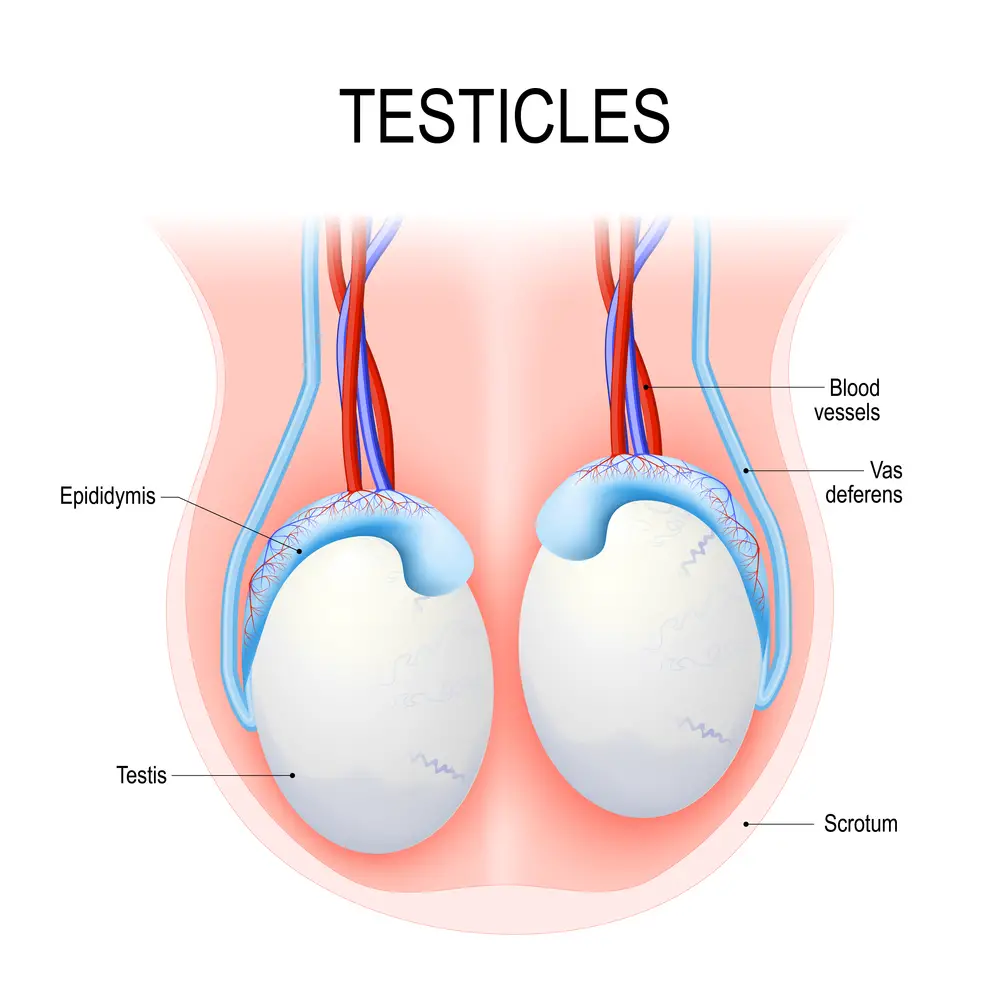
Testicle loss has several distinct causes. Knowing which one applies matters clinically, because it affects timing, surgical planning, and what the patient can expect from implantation.
Picture background
The common thread across all causes is the same: when testicular tissue is too damaged, too compromised, or too dangerous to leave in place, surgical removal becomes the only viable option. A testicular implant can be placed after that removal to restore scrotal appearance regardless of what caused the loss.

Testicular Cancer

Cancer is the most common medical reason for testicle removal. The procedure is called an orchiectomy, and it involves removing the affected testicle to eliminate the primary tumour and prevent spread. Once treatment is complete and recovery is confirmed, a testicular prosthesis can be placed to restore the natural appearance of the scrotum. Many patients pursue this step once the oncological picture is clear.

Testicular Torsion
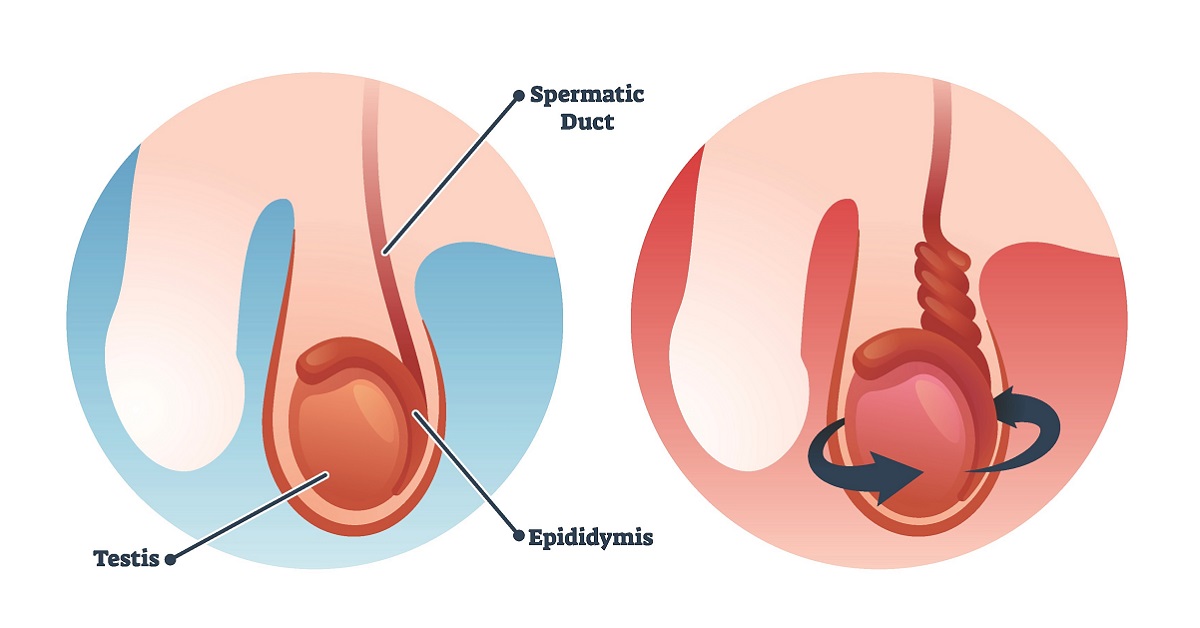
Testicular Torsion: Symptoms, Causes, Risk Factors, Diagnosis, Treatment & Complications
Testicular torsion is a surgical emergency. The spermatic cord twists and cuts off blood supply to the testicle. Time is the critical variable: if the blood supply is not restored within a few hours, the tissue dies and the testicle cannot be saved. When a patient reaches surgery too late, removal is unavoidable.

Severe Testicular Injury

Blunt trauma, serious accidents, or high-impact sports injuries can damage testicular tissue beyond surgical repair. When the structural damage is extensive enough that reconstruction is not feasible, removal is the safer option. A prosthesis placed after healing restores the appearance the injury took away.

Blast injuries, shrapnel, and military trauma are among the more severe causes of testicle loss. The injuries in these cases are often complex, affecting multiple structures simultaneously. After the immediate medical treatment is complete and the patient has recovered sufficiently, testicular prosthesis surgery offers a straightforward way to restore scrotal appearance.

Undescended Testicle

Some men are born with a testicle that never descended into the scrotum during development. If the testicle remains non-functional or poses a long-term health risk, removal may be recommended later in life. A prosthesis placed at the time of removal, or in a separate procedure afterward, maintains the natural shape of the scrotum.

Changes Patients Notice After Testicle Loss

After testicle removal, the scrotum changes in ways that are not medically significant but are immediately visible to the patient. The side where the testicle was removed appears empty. The scrotum looks uneven. The remaining testicle may shift position because there is more space around it.
Docred | Plataforma para médicos generales y especialistas
For some men, these changes are easy to accept. For others, the asymmetry becomes a daily reminder of what happened, and that affects confidence and comfort with their own body in ways that are difficult to separate from the physical change itself.
A testicular implant restores the visual balance of the scrotum. That is its purpose, and for the patients who choose it, that purpose is enough.

Psychological Impact of Testicle Loss

Losing a testicle is a physical event with a psychological dimension that patients do not always anticipate. The scrotum is not a neutral part of the body. It is tied to how men see themselves, and a visible change there can surface feelings that go well beyond the medical procedure that caused it.

The most common experience is heightened self-consciousness, particularly in situations involving intimacy or undressing.

Men who expected to move on quickly sometimes find the change stays present in their awareness longer than they expected. That is not weakness or an overreaction. It is a normal response to a real change in appearance.Responses do vary. Some men adjust without difficulty and feel no need for further intervention.

Others find that the asymmetry continues to affect their confidence in ways that are hard to ignore. Both are valid responses to the same situation.From a clinical standpoint, it is worth knowing that losing one testicle does not affect sexual performance or fertility, provided the remaining testicle is healthy. Testosterone production and sperm function continue normally. For patients experiencing erectile difficulties unrelated to testicle loss, see our overview of erectile dysfunction causes and treatment options.

The decision to have a testicular implant placed is a personal one. There is no medical obligation to proceed, and no medical reason not to. For patients who feel the change in appearance is affecting how they relate to their own body, the implant addresses exactly that. For those who feel settled without one, that is equally the right outcome.

Who Is a Candidate

A testicular implant is an elective procedure. There is no medical indication that requires it, and no medical consequence for declining it. The decision belongs entirely to the patient.

The procedure is appropriate for any man who has lost one or both testicles, regardless of cause, and who wants to restore the natural appearance of the scrotum. The practical criteria are straightforward.

  • Loss of one or both testicles due to any cause
  • A preference for restoring scrotal symmetry and appearance
  • No active infection in the scrotal area at the time of surgery
  • General health sufficient to undergo a short surgical procedure

Timing depends on the clinical situation. When the removal is planned in advance, such as in oncological orchiectomy, the prosthesis can often be placed during the same operation. When the loss results from an emergency, such as torsion or trauma, implantation is deferred until the area has healed fully and the patient has recovered from the initial surgery.

Neither timing approach is superior. What matters is that the tissue is healthy and the patient is ready. Both conditions need to be true before implantation proceeds.

Design and Appearance

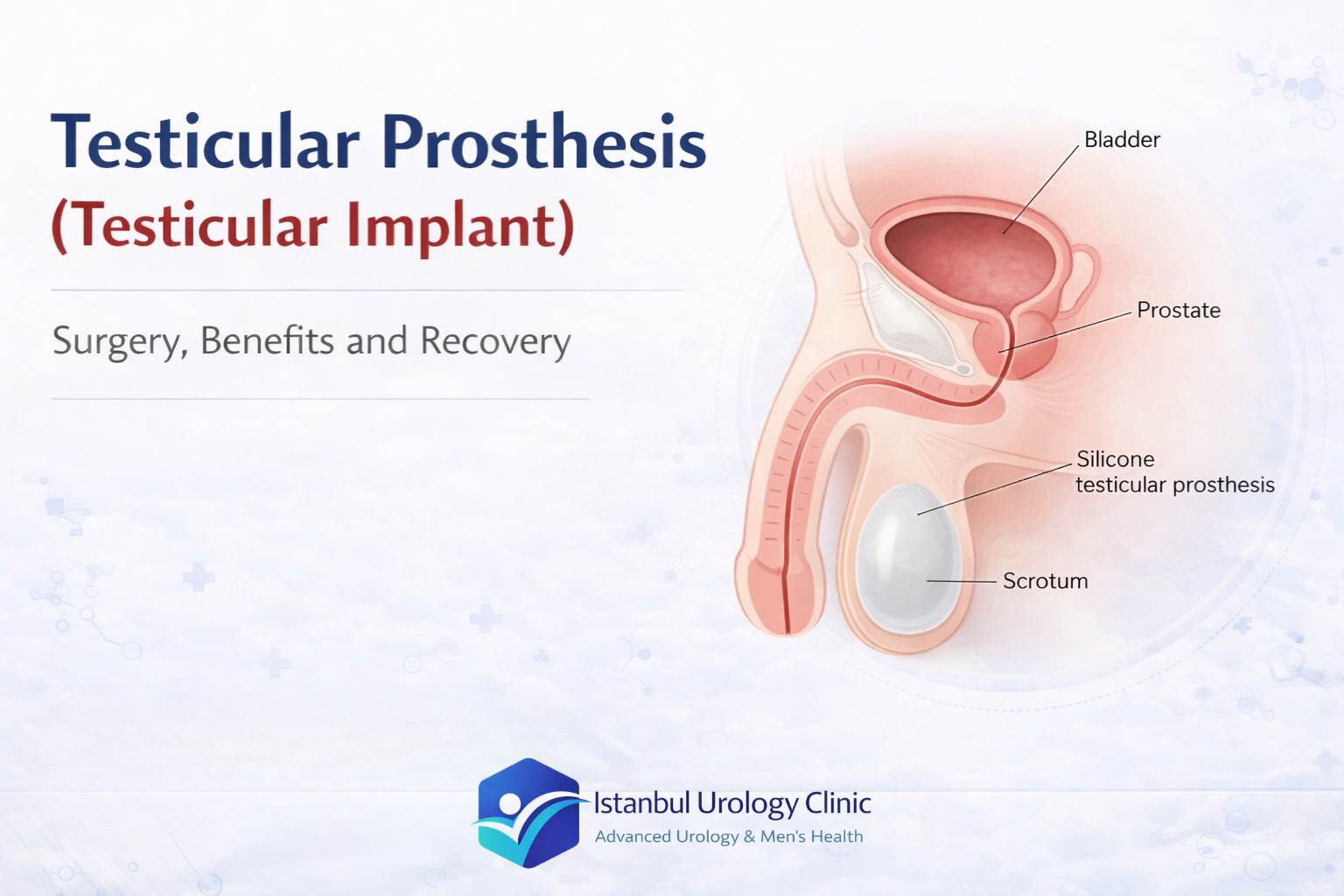
A testicular prosthesis is designed to replicate the appearance and feel of a natural testicle as closely as possible, sitting comfortably inside the scrotum without causing discomfort during normal daily activity.Picture backgroundThe implant is made from medical-grade silicone or other biocompatible materials proven safe for long-term implantation. These are the same material categories used across a wide range of established medical implants.
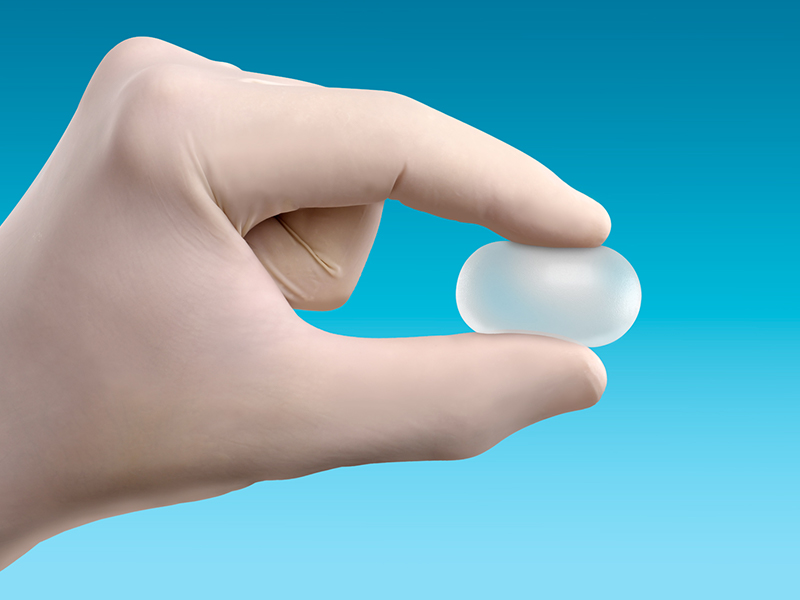
The body tolerates them well, and they maintain their properties over many years without degradation.The shape is oval and slightly firm, consistent with the natural anatomy. Implants are available in multiple sizes, and the surgeon selects the size that most closely matches the remaining testicle. Getting the size right is what produces a balanced, symmetrical result rather than a noticeable difference between sides.

Once placed, the implant sits naturally within the scrotum and moves with normal body movement. From the outside, the difference between the prosthesis and a natural testicle is not apparent to an observer and is minimal even to the patient.The implant is purely cosmetic. It restores scrotal appearance and symmetry.

It does not produce hormones, does not generate sperm, and does not replicate any biological function of the removed testicle. Patients who need hormone support after testicle loss are managed through a separate endocrinological pathway.

Natural vs Prosthesis

A natural testicle serves two biological functions: sperm production for fertility and testosterone production for hormonal health. A testicular implant performs neither. Understanding that distinction before surgery sets realistic expectations and avoids confusion later.

When one testicle is lost, the remaining one compensates. A single healthy testicle typically produces sufficient testosterone and sperm to maintain normal hormonal balance and fertility. The biological loss is real, the functional consequence is often smaller than patients expect.

When both testicles are removed, testosterone production stops entirely. In that situation, testosterone replacement therapy is required to maintain normal hormonal function. The prosthesis, whether one or two implants are placed, addresses appearance only.

It does not alter the hormonal picture in either direction.The implant’s purpose is the same regardless of how many testicles were lost: restore the natural shape and symmetry of the scrotum. Everything else is managed through separate clinical pathways.

Benefits of Testicular Prosthesis Surgery

Testicular implant surgery offers several advantages for patients who want to restore a more natural appearance and feel after testicle loss. The main benefits are summarized below:

← Swipe to see full table →
Benefit Explanation
Improved Body Confidence Restoring the natural appearance of the scrotum consistently reduces the self-consciousness that follows testicle loss. Patients describe feeling more at ease with their own body in a way that is difficult to achieve through acceptance alone.
Restores Scrotal Symmetry The implant recreates the balanced appearance of the scrotum when one testicle is absent. Size matching to the remaining testicle is what produces a result that looks natural rather than corrected.
No Impact on Daily Life Once recovery is complete, the implant does not interfere with physical activity, sexual function, or any aspect of normal daily life. Awareness of the implant typically fades entirely within weeks of recovery.
Psychological Comfort Self-consciousness in intimate situations is one of the most consistent concerns patients raise before surgery. The implant addresses that directly by removing the visible asymmetry that causes it.

The clinical literature supports what patients describe. A 2025 review in Andrologia analysing satisfaction outcomes across modern testicular prostheses found overall satisfaction rates ranging from 83.5% in earlier cohorts to 96.1–97.7% in recent studies, alongside consistent improvements in body image and self-esteem following implantation.

A separate questionnaire-based study published in 2022 reported overall satisfaction rated as excellent or good in 97.7% of patients, with 88.2% stating they would make the same decision again. These figures reflect what is now considered a procedure with one of the more predictable outcome profiles in reconstructive urology.

Preparation Before Prosthesis Surgery

Pre-operative preparation for testicular implant surgery is straightforward. There are no complex protocols, and the procedure does not typically require extensive testing before it can be scheduled.Prosthetic Testicular Implants Los Angeles & San FranciscoThe initial assessment involves a physical examination of the scrotum. The surgeon checks for any active infection or skin condition that would need to be resolved before implantation, assesses the scrotal space available, and discusses implant sizing.
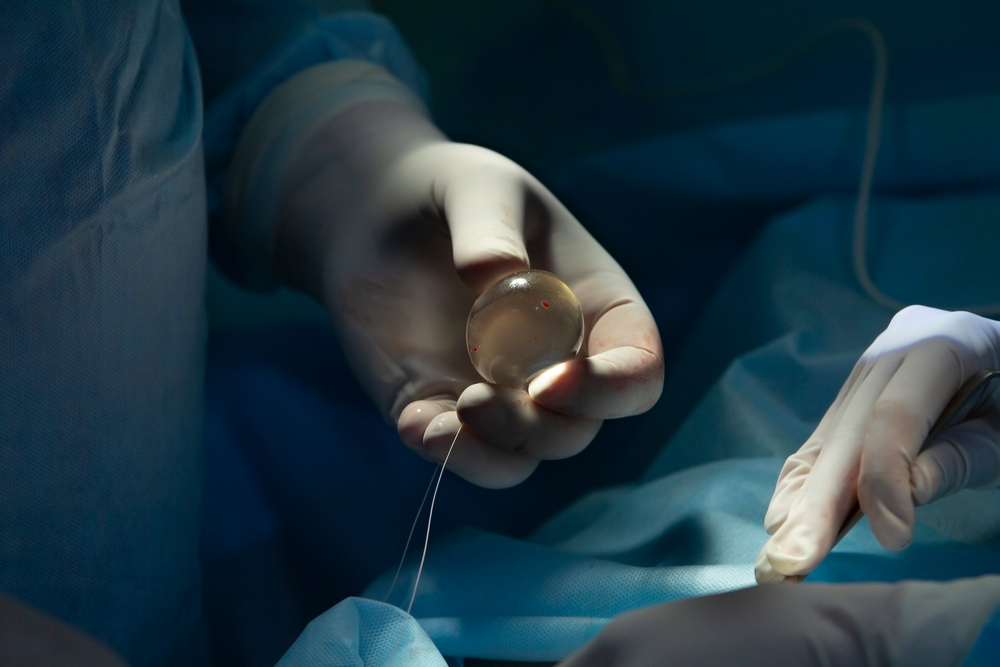
Matching the prosthesis to the remaining testicle is the central decision at this stage, and it is made based on direct examination rather than estimation.Patients with underlying conditions such as diabetes or cardiovascular disease will have basic blood tests and a routine health check before surgery.

For otherwise healthy patients, the evaluation is typically limited to the examination itself.Before the procedure, patients are asked to fast for several hours in line with standard anaesthesia requirements.

Any medications that increase bleeding risk are reviewed, and the surgeon will advise whether to pause them in the days leading up to surgery.In most cases, a single consultation is sufficient to complete the evaluation, confirm the implant size, and schedule the procedure.

Surgical Techniques

Testicular implant surgery is one of the shorter and more straightforward procedures in urology. The operating time is typically under an hour, and same-day discharge is standard.

Testicular Prosthesis (Testicular implants) in Turkey | Cevre Hospital
The surgeon makes a small incision either in the scrotum or in the groin, depending on the patient’s anatomy and the approach best suited to the case. Through that incision, a pocket is created inside the scrotum to receive the implant. The pocket is sized to hold the prosthesis securely while allowing the natural movement that makes the result feel realistic.

Once the implant is positioned and aligned correctly, it is secured in place if needed to prevent migration. The incision is then closed with fine sutures and dressed. The scar is small and fades significantly over the weeks following surgery.

Recovery is quick relative to most implant procedures. Normal movement returns within days, and full daily activity within a few weeks.

Anesthesia and Hospital Stay

The procedure is performed under general or spinal anaesthesia, with the choice made based on the patient’s health profile and the anaesthesiologist’s assessment. General anaesthesia is more commonly used. Operating time is 30 to 60 minutes.

After surgery, the patient is monitored for a short period before discharge. The team checks for bleeding, pain levels, and early recovery before clearing the patient to leave. For straightforward cases, discharge happens the same day.

When the prosthesis is placed at the same time as testicle removal, an overnight stay is recommended to allow adequate monitoring through the immediate post-operative period. In all other cases, patients return to their accommodation within a few hours of the procedure completing.

Recovery and Post-Operative Care

Recovery from testicular implant surgery is quick relative to most implant procedures. Mild swelling, sensitivity, and discomfort in the scrotal area are expected in the first few days and resolve steadily as the tissue settles.

Rest is recommended for the first few days. Supportive underwear reduces scrotal movement and makes the early recovery period more comfortable. The surgical area should be kept clean and dry, and wound care instructions followed as given. A short course of antibiotics and pain medication is standard after this procedure.

Light daily activity resumes within a few days. Strenuous exercise, heavy lifting, and intense physical activity should be avoided for several weeks until healing is complete.

Sexual activity is generally deferred for the same period. Over the first few weeks, the implant settles into its natural position inside the scrotum. By that point, awareness of it as anything other than a normal part of anatomy has typically faded.

Recovery Timeline at a Glance

← Swipe to see full table →
WhenWhat to Expect
Day 1–3Rest at home. Mild swelling and scrotal sensitivity. Supportive underwear worn day and night. Antibiotics and pain medication as prescribed.
Day 4–7Light daily activity resumes. Walking, desk work, and short outings are comfortable. Swelling begins to settle.
Week 2–3Most discomfort resolved. Return to office work and routine activity. Driving is generally fine.
Week 4–6Strenuous exercise, heavy lifting, and sexual activity can resume once cleared at follow-up.
After Week 6The implant has settled into its natural position. No lasting restrictions on physical activity, sport, or intimacy.

Mini Tip
Supportive underwear worn consistently during the first week reduces swelling and keeps the implant stable while the surrounding tissue heals.

Expectations After The Surgery

Once recovery is complete, the prosthesis sits naturally inside the scrotum and moves with normal body movement. The result is a scrotal appearance that is balanced and symmetrical, with the implant indistinguishable from a natural testicle when sizing has been matched correctly.

There are no lasting restrictions on daily activity. The implant does not interfere with exercise, physical work, or sexual activity once healing is confirmed. Consciousness of its presence typically fades entirely within the first few weeks after recovery.

The prosthesis restores appearance. It does not restore biological function. Hormone production and sperm generation are not affected by the implant in either direction. Patients who require hormonal support after testicle loss are managed through a separate pathway, independent of the prosthesis.

What patients describe as the clearest benefit is simpler than any clinical metric: they stop thinking about it. The self-consciousness that followed the loss, in intimate situations, in the changing room, in their own awareness of their body, recedes once the visual asymmetry is gone.

Longevity of the Testicular Prosthesis

A testicular implant is built for permanent implantation. The materials are medical grade, biocompatible, and designed to remain inside the body indefinitely without degradation.
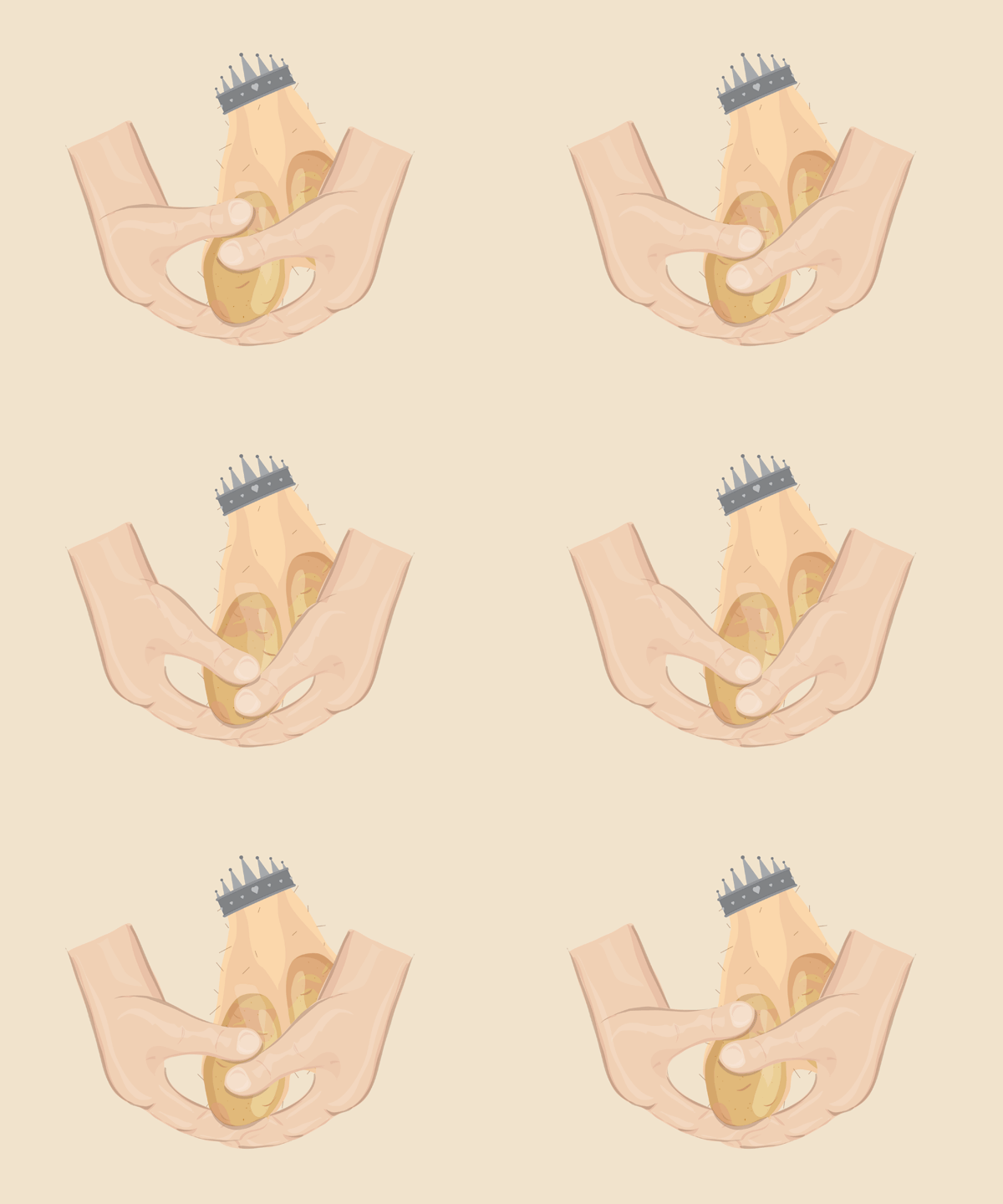
The implant placed during surgery is typically the only one a patient will ever need. With no complications, it stays in position for life. The body adapts to it, the tissue settles around it, and over time it becomes an unremarkable part of normal anatomy.

Complications are rare but not impossible. Infection or implant migration may require surgical revision in a small number of cases. When that happens, the implant is adjusted or replaced through a procedure similar to the original surgery. These situations are manageable and follow established protocols.

The prosthesis requires nothing after implantation except routine follow-up. It is placed, it heals, and it stays.

Potential Risks and Complications

Although testicular implant surgery is considered safe, like any procedure it carries some potential risks. The most relevant ones are summarized below:

← Swipe to see full table →
Risk Description
Infection Rare in centres that follow strict sterile protocols and prescribe prophylactic antibiotics. When it occurs, prompt treatment is required and revision surgery is occasionally necessary.
Swelling Expected in the first few days after surgery. It is a normal response to surgical dissection and resolves steadily over the first one to two weeks.
Implant Movement Uncommon. If the prosthesis shifts from its original position, minor surgical repositioning corrects it. Proper pocket construction during the initial procedure significantly reduces this risk.
Pain or Sensitivity Mild discomfort and scrotal sensitivity are normal in the days following surgery. Both resolve as the tissue heals and the implant settles into position.
In our clinical experience, these complications are uncommon when the procedure is performed under proper sterile conditions and patients follow post-operative instructions carefully. Most of these issues, if they occur, are manageable and can be treated effectively when identified early.

How Surgeons Choose the Right Prosthesis Size

Size selection is one of the most consequential decisions in testicular implant surgery. The wrong size produces an obvious asymmetry that undermines the entire point of the procedure. The right size produces a result that requires no explanation.
Picture background
Before surgery, the surgeon examines the scrotum directly and measures the remaining testicle. That measurement drives the implant selection. Manufacturers produce implants across a range of sizes, and the surgeon chooses the closest match to the natural anatomy rather than working from a standard default.

When both testicles are absent, the selection is based on the overall scrotal dimensions to produce a result that looks proportionate rather than either overfilled or insufficient.

During the procedure, the selected implant is trialled inside the scrotum before permanent placement is confirmed. If the fit is not right, the size is adjusted before the incision is closed. That intraoperative check is a straightforward step that prevents a correctable problem from becoming a revision surgery later.

Mini Tip
Size matching to the remaining testicle is what separates a result that looks natural from one that looks corrected. It is worth discussing in detail during the pre-operative consultation.

Companies Manufacturing Testicular Prostheses

Testicular implant are produced by a small number of specialised medical device manufacturers. All use medical-grade silicone or comparable biocompatible materials engineered for long-term implantation. The differences between brands lie in design details, regulatory approvals, and the clinical experience built around each system.
Some of the manufacturers whose devices are used in experienced urology centres include:

Coloplast

Coloplast is a Danish medical device company with a significant presence in urology implant manufacturing. Its testicular prosthesis, the Torosa®, holds FDA approval in the United States, making it the only testicular implant with that regulatory designation. It is widely used across experienced urology centres internationally and has an established long-term clinical record.

Rigicon

Rigicon is a urology-focused medical device company with a growing portfolio of implantable devices. Its testicular prosthesis line, the Testi10™, is designed to replicate the natural shape, weight, and feel of a human testicle. The system is available in two versions, each suited to different patient preferences and surgical considerations.
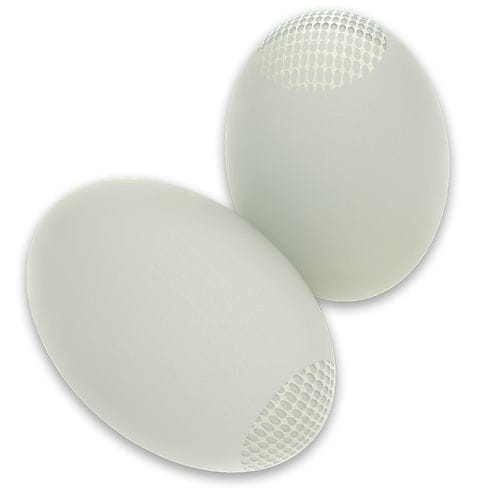
Testicular implant - Firm Testi10™ - Rigicon - anatomical / silicone

  • The Testi10™ Saline Pre-Filled Testicular Prosthesis comes pre-filled with sterile saline solution. The pre-filled design simplifies the surgical procedure and produces a softer, more pliable texture that closely mimics the feel of a natural testicle.
  • The Testi10™ Firm Testicular Prosthesis is constructed from solid medical-grade silicone. It has a more defined, stable structure and maintains its shape consistently over time, while still producing a natural scrotal appearance.

Both versions of the Testi10™ prosthesis are available in five different sizes (XS, S, M, L, XL). This allows the surgeon to select the most appropriate implant size based on the patient’s anatomy and the size of the remaining testicle, helping achieve a balanced and natural appearance of the scrotum.

POLYTECH Health & Aesthetics

POLYTECH is a German silicone implant manufacturer with a background in reconstructive surgery. The company produces testicular implant designed for natural scrotal appearance, drawing on its broader expertise in medical-grade silicone engineering across multiple implant categories.

Promedon

Promedon is a Latin American medical device company with an established presence in reconstructive urology. Its N&S testicular prosthesis is made from specialised silicone formulated to simulate the texture and feel of a natural testicle, and the device has an established record in reconstructive procedures across international centres.

Across all manufacturers, modern testicular prostheses use medical-grade silicone that the body tolerates well over the long term. The device brand matters less than the surgeon’s familiarity with it and the accuracy of the size selection. Those two factors determine the result more than any material specification.

Cost of Testicular Prosthesis Surgery in Turkey

Testicular implant surgery in Turkey is priced significantly below comparable treatment in Western Europe, the UK, or the United States, while the implant brands, hospital infrastructure, and surgical standards remain identical to international practice. The difference reflects healthcare economics, not a difference in what is delivered.

At Istanbul Urology Clinic, all-inclusive pricing starts at €2,500 for a single testicular implant and €3,800 for bilateral placement. The final figure is confirmed after individual evaluation and depends on the implant brand selected, the surgical approach required, and whether the prosthesis is placed at the same time as orchiectomy or as a separate procedure.

What the all-inclusive package covers:

  • Surgeon and surgical team fees
  • The testicular implant (Coloplast Torosa®, Rigicon Testi10™, or equivalent)
  • General or spinal anaesthesia
  • Operating room and Biruni University Hospital facilities
  • One-night hospitalisation where indicated
  • Post-operative medications
  • Three nights at a 5-star hotel
  • VIP airport transfers and in-city transportation
  • Translator support throughout the stay
  • Complication insurance
  • Post-operative follow-up consultations

For comparison, the same procedure typically costs £4,500–£7,000 in the UK private sector and $8,000–$12,000 in the United States, excluding hospital stay and aftercare. The Turkish package compresses surgery, accommodation, and full coordination into a single transparent fee.

For an exact quotation based on your case, contact our team directly. International patients receive a confirmed treatment plan and price before travelling.

Common Myths About Testicular Prosthesis

A few misconceptions about testicular implant surgery come up repeatedly, and they are worth addressing directly.

The most common is that the implant affects sexual performance. It does not. A testicular prosthesis is placed inside the scrotum and has no connection to the structures involved in erection or ejaculation.

The second is that it will feel artificial. Modern implants are designed to replicate the shape, weight, and firmness of a natural testicle, and the perception of any difference typically fades within weeks of recovery.

Both concerns are understandable. Neither should be the reason a patient avoids a procedure that would otherwise improve how they feel about their body.

Is Testicular Prosthesis Surgery Safe?

Testicular implant surgery has a strong safety profile. The procedure is short, the implant materials are well established, and the complication rate in experienced hands is low.

The implants are made from medical-grade silicone and comparable biocompatible materials with a long track record in human implantation. Rejection is not a recognised complication of these devices. The body adapts to them without treating them as a foreign threat.

Complications are uncommon. Superficial wound infection occurs in roughly 1–2% of cases and is generally resolved with antibiotics without removing the implant. In men undergoing prosthesis placement after radical orchiectomy for testicular cancer, the implant removal rate has been reported at under 0.5%, among the lowest revision rates of any urological implant procedure. Infection, swelling beyond the normal post-operative window, and implant migration are the recognised risks worth understanding before surgery. Each has a clear management pathway if it arises.

The procedure is straightforward, recovery is quick, and the result is stable for life. The combination of a short operating time, a complication profile measured in low single digits, and patient satisfaction consistently above 80% makes this one of the more reliably positive procedures in reconstructive urology.

Frequently Asked Questions

Yes, a testicular prosthesis can be placed on one side if a patient has lost only one testicle. If both testicles are missing, two prostheses can also be placed to restore a balanced appearance of the scrotum.


No. A testicular implant does not produce hormones. If a patient still has one healthy testicle, it is usually able to produce enough testosterone to maintain normal hormone levels.

In some cases, testicular implants may be used in children, particularly when a testicle is absent due to congenital conditions or injury. However, many doctors prefer to wait until the body has developed further so the most appropriate implant size can be selected.

Testicular prostheses are designed to closely mimic the shape and firmness of a natural testicle. After the recovery period, most patients report that the implant feels natural inside the scrotum.


Once the implant has settled into position, it usually remains stable while still allowing slight natural movement, similar to a normal testicle. In rare cases, the prosthesis may shift and require medical evaluation.


Patients should contact their doctor if they experience severe swelling, increasing pain, fever, redness around the surgical area, or discharge from the wound, as these symptoms may indicate infection.


Most patients can return to light daily activities within a few days after surgery. However, intense physical activity and sexual intercourse are usually postponed for several weeks until healing is complete.


Summary

Testicle loss has several possible causes, but the path to restoring a natural appearance is the same regardless of how it happened. Testicular implant surgery is a straightforward, well-established procedure with a consistent record of patient satisfaction.

The change it delivers is not only cosmetic. Regaining a balanced scrotal appearance removes something that sits in the background of daily life in ways that are hard to articulate until it is gone. Patients describe the result less in terms of what the surgery added and more in terms of what it stopped taking away.

If you are considering this procedure, the starting point is an individual evaluation. Implant type, size selection, and timing all depend on your specific anatomy and situation. There is no meaningful answer to those questions without a direct assessment.

At Istanbul Urology Clinic, we take patients through the full process from evaluation to recovery, with clear information at each stage and realistic expectations throughout.

Book a confidential consultation with Prof. Dr. Ö. Onuk, over 3,000 urological procedures and 23 years of experience in reconstructive andrology. Your evaluation is free, and you’ll receive a confirmed treatment plan before you travel.

Was this helpful?

Yes
No
Thanks for your feedback!
Share:
WhatsApp
Facebook
X
LinkedIn
5 1 vote
Article Rating
0 Comments
Oldest
Newest Most Voted

Ready To Begin?

Request a Call Back Now!
Fill out our quick form to request your appointment, and our team will be in touch to confirm all the details and answer any questions

Recognized for

European Care Standards
Trusted by International Patients
Please fill the form
to start your consultation

Our specialists will review your details and respond with personalized guidance privately and within 24 hours.

Step 1 of 2
Join Thousands of
Men Who Took the First Step
International patients who found expert urological care in Istanbul with discretion and confidence.

Redirecting You To WhatsApp

Our patient coordinators will respond to your inquiry privately — typically within minutes during business hours.

Please enter your phone number below