
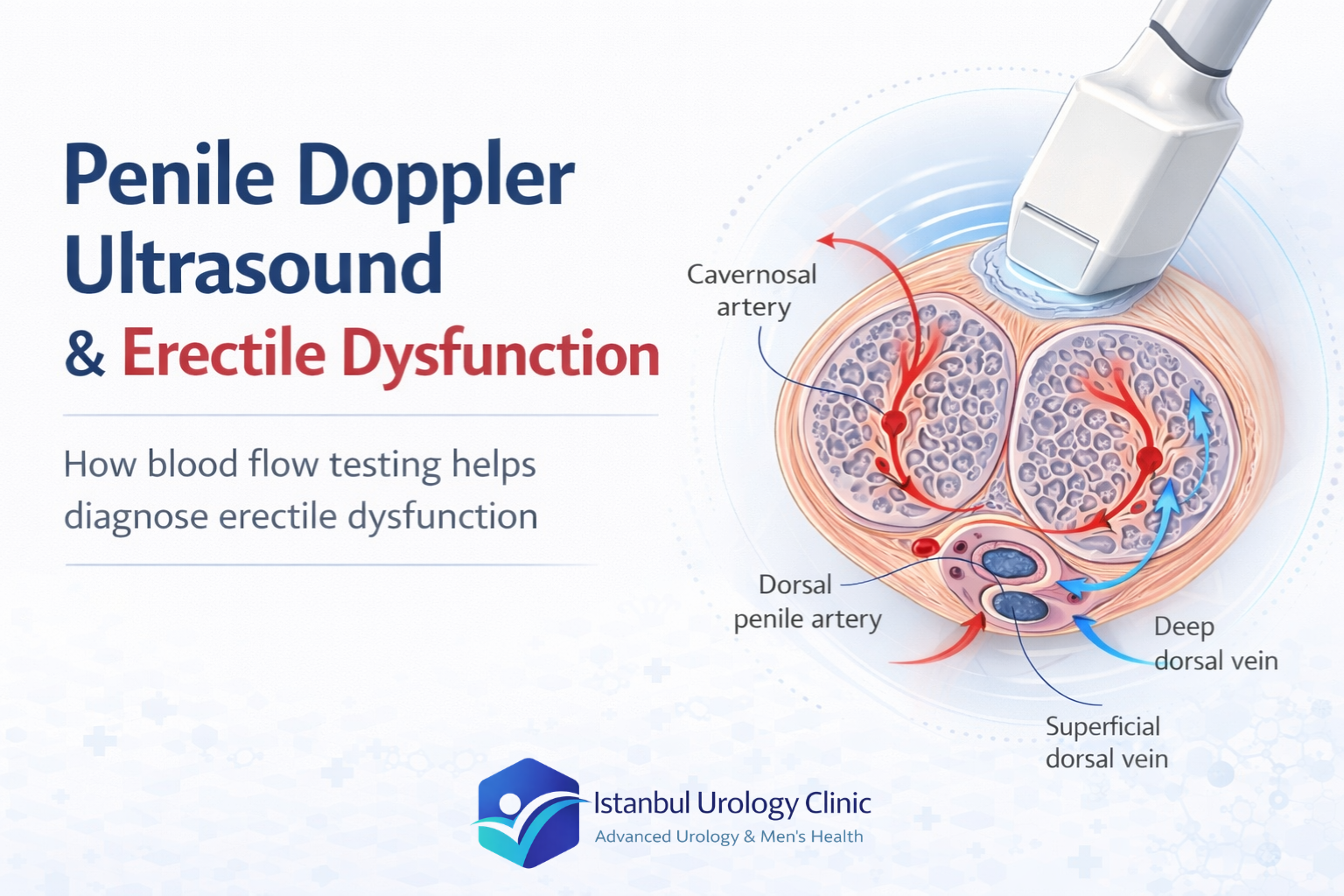
Last updated: June 23, 2026

Penile Doppler Ultrasound: PSV, EDV & ED Diagnosis

Medically reviewed by:

Prof. Dr. Ö. Onuk

Professor of Andrology

13 min read
Copy link
Penile doppler ultrasound

The penile Doppler ultrasound is the test that turns a frustrating pattern of symptoms into a specific, treatable diagnosis. If you have been dealing with erectile difficulties for months or years, trying medications that work inconsistently, and getting explanations that never quite fit what you are actually experiencing, this is usually where clarity begins.

Symptoms alone rarely identify the cause. A weaker erection can come from arterial blood flow, a venous leak, a hormonal issue, or a neurological factor.

Without measuring what is actually happening inside the penis, treatment becomes guesswork. The Doppler examination removes that uncertainty by imaging blood flow in real time, inside the penile arteries and veins, during a controlled erection.

At Istanbul Urology Clinic, the penile Doppler ultrasound is performed in-house at our partner hospital. It is the starting point for almost every patient presenting with erectile dysfunction of unclear origin, and the result directly determines which treatment path makes sense for you.

Why is a Penile Doppler Ultrasound Performed?

The most common reason for ordering this test is intermittent erectile dysfunction, where erections are sometimes normal and at other times weaker or unreliable without an obvious explanation. That inconsistency is itself a diagnostic signal worth investigating.

This pattern appears in men with no chronic medical history as much as in those with diabetes or cardiovascular disease. The Doppler examination cuts through the ambiguity by showing exactly what the penile vasculature is doing during an erection.
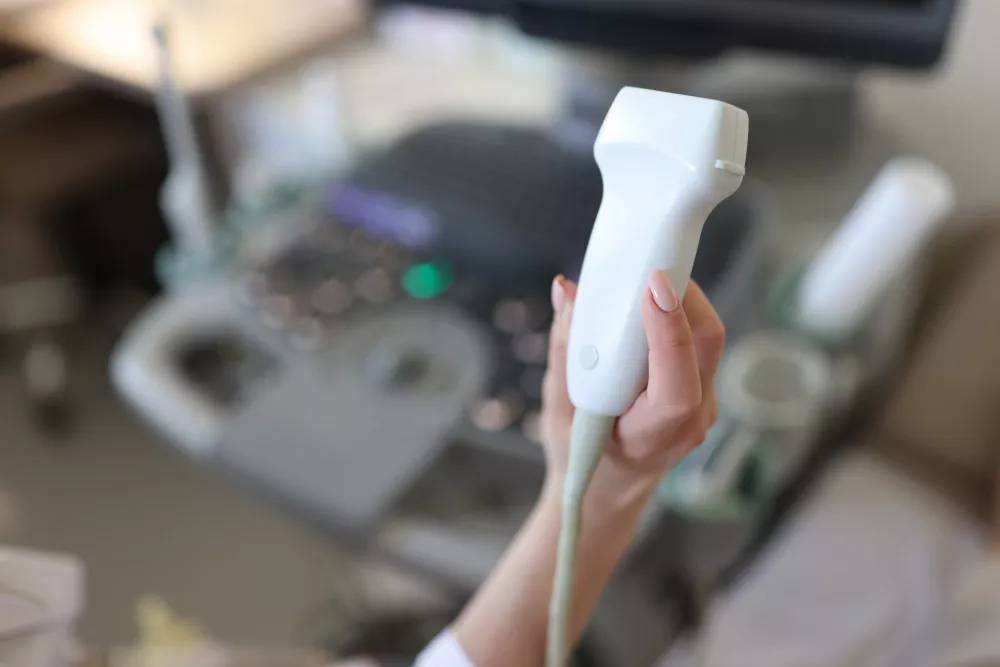
Penile doppler ultrasound

Specifically, it answers three questions:

  • How much blood is entering the penis
  • How quickly it is leaving
  • Whether the erectile tissue is responding normally

We perform this Doppler study before most advanced erectile dysfunction treatments because the results directly change the plan. It is the primary tool for confirming venous leakage, where blood enters the penis but escapes too quickly to sustain a firm erection. It also reveals how Peyronie’s disease is affecting penile blood flow, and how conditions like diabetes or hypertension have altered the small vessels that control erectile function.

Patients who arrive convinced the problem is psychological are common in our clinic. After the Doppler, a physical cause is identified far more often than expected. For most of these men, that finding is not unwelcome news. It is a relief. It means there is a real diagnosis, a real cause, and a real treatment path, rather than a vague recommendation to reduce stress and try again.

The penile Doppler ultrasound is the gold standard diagnostic tool for vascular erectile dysfunction across Europe and the United States, and we follow the same protocols. In our practice, diagnosis and treatment planning happen during the same visit, compressing what is often weeks of back-and-forth into a single structured consultation.

Case Example

When the Doppler Changed the Diagnosis

A 42-year-old patient came to us after two years on tadalafil. The pill worked at first, then stopped reliably. He had already seen two doctors and a psychologist. Both told him the problem was stress-related. He ran his own business, had a young child, and was about to start cognitive behavioural therapy.

His Doppler told a different story.

Peak Systolic Velocity (PSV): 18 cm/sec. Well below the 30 cm/sec threshold for normal arterial inflow. End Diastolic Velocity (EDV) came in at 3 cm/sec, so the venous side was fine. The diagnosis was clear: moderate-to-severe arterial insufficiency. Not psychological.

His cardiologist later confirmed early-stage cardiovascular disease. The ED was the first sign. The treatment plan changed completely: a daily low-dose tadalafil regimen, a structured cardiovascular workup, and lifestyle changes targeting vascular health.

Six months later, his erections were reliable again. More importantly, a serious cardiovascular condition was caught early because his ED was investigated properly the first time.

Cases like this are one reason we routinely recommend Doppler testing before escalating treatment. Without it, this patient may have continued treating the wrong diagnosis for years.

Is a Penile Doppler Ultrasound Painful or Dangerous?

Many men arrive with the same two concerns: pain and safety. Both are understandable, and both are largely unfounded once the procedure is explained clearly.The injection that induces the erection involves a very fine needle and produces a few seconds of mild discomfort. After that, the examination itself is painless.

No anaesthesia is required, no surgical environment, no recovery period. The test is performed calmly under medical supervision and is finished within 30 to 40 minutes.

Penile doppler ultrasoundThe penile Doppler ultrasound carries a minimal side effect profile. The most common reactions are a small bruise or brief local swelling at the injection site, both of which resolve within a few days.

A prolonged erection is rare. When it does occur, it is managed quickly inside the clinic without further intervention needed from you.The test does not affect sensation, ejaculation, fertility, or future sexual function. Patients leave the clinic the same day and return to normal activity without restrictions.

The most common barrier is not medical. It is delay. Men put off the test for months because they expect something far worse than what actually happens. That delay costs time, prolongs uncertainty, and sometimes allows an underlying condition to progress further before treatment begins.

“The most common mistake we see is starting treatment before making an accurate diagnosis. The Doppler gives us a clear map of what is happening inside the penis, and that map can completely change the treatment plan we recommend.”
ÖO
Prof. Dr. Ö. Onuk
Professor of Andrology, Istanbul Urology Clinic

How is a Penile Doppler Ultrasound Performed?

The full procedure takes 30 to 40 minutes from start to finish. Here is what happens at each stage.
1

Preparation and injection

The doctor cleans the area and administers a small injection at the base of the penis. The needle is fine-gauge. Most patients describe the sensation as lighter than a standard blood draw.

2

Erection develops (5–10 min)

The injection contains a medication that opens the penile blood vessels and induces an erection under controlled conditions. Within 5 to 10 minutes, the erection begins to develop.

3

Ultrasound measurements

The ultrasound probe is applied to measure blood velocity through the penile arteries and assess how effectively the veins retain blood inside the erectile chambers. This is the core of the examination.

4

Monitoring period (15–20 min)

The erection is monitored for 15 to 20 minutes while the doctor records multiple readings. A single snapshot is not enough. The pattern of blood flow over time is what produces a reliable result.

5

Recovery and discharge

You walk around for a few minutes, including a short flight of stairs. This brings circulation back to baseline and allows the erection to subside naturally. If it does not resolve on its own, a reversal medication is given inside the clinic.

Preparation Before a Penile Doppler Ultrasound

Preparation for the Doppler study is straightforward. No hospital admission, no fasting, no complicated pre-procedure protocol.

The most important thing to do beforehand is to give the doctor a complete list of current medications. This includes blood thinners, cardiac drugs, and PDE5 inhibitors such as Viagra or Cialis. Depending on what you are taking, you may be asked to pause one medication the day before. Patients typically continue everything as normal.

Fasting is not required. Eat and drink normally before attending, including coffee. Wear comfortable clothing. There is no need to bring a companion, though you are welcome to.

If you have existing results, bring them. Previous Doppler reports, hormone blood tests, diabetes panels, or blood pressure records all give the doctor useful context before the examination begins. They can change the interpretation of findings and occasionally prevent the need for repeat testing.

Anxiety before the test is common and worth mentioning to the doctor on arrival. Psychological stress can blunt the initial vascular response to the injection, which affects the accuracy of early measurements.

We account for this by giving you adequate time to settle before readings are taken. Telling us you are nervous is not embarrassing. It is useful information that helps us read the result correctly.

Tip

Most patients describe the procedure as considerably easier than they anticipated. From injection to completion, the test is typically done in under 40 minutes.

What Do the Results of a Penile Doppler Ultrasound Show?

The Doppler report is not just a list of numbers. It gives a clear picture of the real cause of erectile dysfunction. This matters because treatment decisions should follow the actual problem, not a guess.

Findings generally fall into three categories.

Doppler FindingWhat It MeansPossible Treatment Direction
Arterial InsufficiencyThe penile arteries are not delivering enough blood to produce or sustain a firm erection. Inflow is the primary problem.Treatment focuses on improving arterial circulation through medications, lifestyle changes, or regenerative approaches depending on severity.
Venous LeakageBlood enters the penis normally but escapes too quickly through the veins. The erection starts but cannot hold.Early cases may respond to supportive treatments. Advanced or confirmed venous leakage often requires a more definitive solution such as penile implant surgery.
Normal Vascular ResultPenile blood flow is within normal parameters. The cause of erectile dysfunction is likely hormonal, neurological, medication-related, or psychological rather than vascular.Investigation shifts toward hormone panels, nerve function assessment, medication review, or psychological evaluation rather than vascular intervention.
← Swipe to see full table →


Doppler results are read across several parameters: peak systolic velocity (PSV), end-diastolic velocity (EDV), the quality of the erection achieved during the test, and your broader medical history.

No single number makes the diagnosis. The findings are read together, in context. The Doppler result directs the treatment conversation. It does not replace it. The final plan is always shaped by the full clinical picture, including factors the ultrasound cannot capture on its own.

What Each Result Means for Your Treatment

Doppler Result

Normal Blood Flow

Investigate hormones, neurology, or psychological factors

Arterial Insufficiency

LifestyleMedicationRegenerative therapy

Severe Venous Leak

Penile implant discussion

Every patient receives an individualised treatment plan. This is the general decision framework.

How Accurate is a Penile Doppler Ultrasound?

The penile Doppler ultrasound is the most reliable non-invasive test available for evaluating the vascular causes of erectile dysfunction. When performed correctly, it produces direct, measurable data on arterial inflow and venous retention. These are the two mechanisms that determine whether an erection can be achieved and held.

Accuracy depends on two things: technique and interpretation.

The injection must induce an adequate erection for the measurements to reflect true erectile physiology. The readings must then be evaluated by someone with enough experience to separate normal variation from real pathology. In the right hands, the test is highly reliable.

That reliability is why penile Doppler ultrasound is recognized internationally as a standard diagnostic tool for vascular erectile dysfunction. The 2025 European Association of Urology (EAU) Guidelines on Male Sexual and Reproductive Health specifically recommend duplex Doppler ultrasound in the diagnostic workup of erectile dysfunction when initial assessment is inconclusive or when a vascular cause needs to be confirmed before advanced treatment.

At Istanbul Urology Clinic, we follow the same evidence-based protocols established by these European and international guidelines.Before committing to any advanced treatment, knowing exactly what the vasculature is doing is not optional. It is the foundation the entire treatment plan rests on.

Understanding Penile Doppler Measurements

During the examination, doctors measure several specific parameters that together reveal whether erectile dysfunction is vascular in origin, and if so, which mechanism is responsible.

The two most clinically significant measurements are Peak Systolic Velocity (PSV), which reflects arterial inflow, and End Diastolic Velocity (EDV), which indicates how well the veins are retaining blood during the erection.

← Swipe to see full table →
MeasurementNormal RangeWhat It Indicates
Peak Systolic Velocity (PSV)Above 30 cm/secNormal arterial inflow
PSV 25 to 30 cm/secBorderlineMild arterial insufficiency possible
PSV Below 25 cm/secAbnormalReduced arterial blood supply
End Diastolic Velocity (EDV)Below 5 cm/secNormal venous function
EDV Above 5 cm/secAbnormalVenous leakage likely

These numbers do not stand alone. PSV and EDV are interpreted alongside erection quality during the test, the patient’s clinical history, and physical examination findings. A borderline PSV in a diabetic patient with progressive symptoms carries different weight than the same number in a younger man with no vascular history. Doppler interpretation requires clinical judgement, not just a reference range.

What Happens After a Penile Doppler Ultrasound?

One practical advantage of the Doppler examination is that results are available immediately. There is no waiting for a laboratory to return a report. The measurements taken during the test give a clear, real-time picture of arterial inflow and venous retention. From that picture, a realistic treatment direction emerges the same day.

Where the Doppler shows blood flow is partially preserved, the treatment goal is to improve erectile function rather than replace it.

My protocols: SoftWave Therapy for Erectile Dysfunction

Depending on the degree of vascular compromise, options worth discussing include platelet-rich plasma (PRP) injections, stem cell therapy, or shockwave therapy. All three aim to stimulate tissue repair and improve vascular response. These approaches work best when there is still functional tissue to work with.

Where the Doppler shows significant vascular damage or advanced venous leakage, regenerative treatments are unlikely to produce stable results. The honest conversation at that point is about surgical options, most commonly penile implant surgery, which restores reliable erectile function independently of the damaged vascular system.

The value of having that conversation on solid diagnostic ground is significant. Some patients arrive ready to begin treatments that the Doppler results make clearly inappropriate. The test redirects the plan before time and money are spent on something that would not have worked.

That is one of the most consistent things the Doppler delivers.

Patients typically leave the clinic with three things they did not have when they arrived: The real cause of the problem

  • The severity of the condition
  • A treatment direction matched to their specific findings

For men who have been living with unexplained erectile dysfunction for years, that clarity is significant. Uncertainty about why the body is failing is its own burden. A definitive answer, even when it points toward surgery, tends to feel like relief rather than bad news.

Tip

Quitting smoking, bringing blood sugar under control, and maintaining regular physical activity all support vascular health. They can improve how well the body responds to treatment, regardless of which path is chosen.

Who Should Consider a Penile Doppler Ultrasound?

Not every case of erectile dysfunction requires vascular imaging. But when the cause is unclear, when treatments are not working, or when a surgical decision is on the table, the penile Doppler ultrasound is the test that removes the guesswork.

There are six clinical situations where we recommend it consistently.

1

Peyronie’s disease with ED

If you have penile curvature combined with erectile dysfunction, the Doppler evaluates blood flow and the structural condition of the tissue at the same time. Treating curvature without understanding the vascular picture gives an incomplete result.

2

Unstable erections

If your erection begins normally but fades during intercourse, that specific pattern points toward a vascular cause. The Doppler confirms whether arterial insufficiency or venous leakage is responsible.

3

Young men with unexplained ED

Erectile dysfunction appearing at a younger age without an obvious medical reason warrants vascular evaluation. Psychological causes are often assumed by default, but a normal Doppler is what actually confirms that assumption.

4

When PDE5 inhibitors stop working

If pills like Viagra or Cialis stop working despite correct use, the Doppler identifies whether the underlying problem has progressed beyond what medication can address. This finding frequently changes the treatment direction entirely.

5

Diabetes, heart disease, or hypertension

If you have diabetes, cardiovascular disease, or high blood pressure and notice progressive changes in sexual performance, do not wait. These conditions damage penile blood vessels silently. Catching the extent of damage early expands your treatment options.

6

Before penile implant surgery

The Doppler is standard practice before penile implant surgery or any other advanced intervention. Operating without a clear vascular picture means making consequential decisions without the information needed to make them correctly.

Across all of these situations, what the test ultimately delivers is the same: a specific answer to a question that has often gone unanswered for too long.

Frequently Asked Questions

Directly, no. The Doppler shows the level of vascular damage that may make a penile implant the right choice, but the final decision also depends on how you respond to medication, your overall health, and what you and your surgeon agree on. The test provides one of the most important pieces of evidence in that conversation. It does not make the decision alone. When the Doppler shows severe arterial insufficiency or advanced venous leakage that medication cannot overcome, the implant becomes a logical next step rather than a leap.

It can be suspected from symptoms alone: erections that start firm but cannot hold during intercourse, weak or absent morning erections, and inconsistent response to pills like Viagra or Cialis. Confirming it reliably requires imaging. Cavernosometry and cavernosography are alternatives, but both are more invasive than a Doppler ultrasound. For most patients, the Doppler is the simplest, fastest, and most accurate first step toward a venous leak diagnosis.

PSV below 25 cm/sec is considered abnormal and indicates reduced arterial blood supply. PSV below 20 cm/sec usually points to severe arterial insufficiency, often with significant vascular damage. The exact threshold for "severe" is read alongside your age, your symptoms, and your overall vascular health, not just the number on the report. A PSV of 18 cm/sec in a 40-year-old non-diabetic carries different clinical weight than the same number in a 70-year-old with long-standing diabetes.

If a pill works inconsistently — fine some weeks, poor others — that pattern itself is a diagnostic signal worth investigating. Inconsistent response often points to early vascular compromise that will progress over time. Catching it now expands your treatment options significantly. Waiting until pills stop working entirely usually means the underlying problem has advanced to a stage where simpler treatments are no longer effective.

Not directly, but it confirms it by exclusion. A normal Doppler result — PSV above 30 cm/sec, EDV below 5 cm/sec, and good erection quality during the test — strongly suggests the cause is not vascular. In a man with persistent erectile dysfunction, that result is the clearest signal that psychological factors are likely involved. This is a useful diagnostic finding because it changes the treatment direction toward therapy or counselling rather than medication, regenerative treatment, or surgery.

It is rare with proper technique. The test measures real-time blood flow with high precision. The most common reason for a misleading result is an inadequate erection during the examination, often caused by anxiety. We give you time to settle and may repeat measurements if needed.

Reference ranges are the same regardless of age. What changes with age is the likelihood of finding vascular changes. A borderline PSV in a 65-year-old means something different than the same number in a 35-year-old, which is why interpretation is always read alongside your full clinical picture.

Yes. The test is safe to repeat as often as clinically needed. We sometimes repeat it after 6 to 12 months to track changes in vascular health, particularly in patients with diabetes or progressive cardiovascular disease.

If you have concerns about erectile function before marriage, a Doppler can rule out a vascular cause and provide reassurance backed by measurable data rather than speculation. For men with no symptoms, the test is not routinely indicated.

Yes. Smoking can reduce blood flow and damage small blood vessels over time. This effect may sometimes appear clearly in Doppler measurements.

In most cases, the results remain relevant for a long time unless there are major changes in health conditions such as diabetes control, cardiovascular disease, or lifestyle factors that affect blood circulation.

Usually it is not needed. After a penile implant, erections are created mechanically by the device, so evaluating natural blood flow is no longer necessary.


PSV (Peak Systolic Velocity) measures how quickly blood enters the penile arteries during an erection. Values above 30 cm/sec are generally considered normal, while lower values may suggest arterial insufficiency.

EDV (End Diastolic Velocity) measures how much blood continues to leave the penis during an erection. Elevated EDV values may suggest venous leakage, meaning blood enters the penis normally but cannot be retained long enough to maintain rigidity.

Conclusion

Erectile dysfunction is rarely the problem itself. It is a signal that something else is wrong. Treating it effectively depends on knowing what that something is.

The penile Doppler ultrasound provides that answer in a single, structured examination.

At Istanbul Urology Clinic, the Doppler is our standard starting point before any advanced treatment discussion. Not because it is a formality, but because the findings change the plan. Patients who arrive with years of failed treatments often discover within one visit that they were addressing the wrong problem.

The Doppler tells you what is happening. The next decision is what to do about it. For a complete view of how diagnosis connects to the full treatment ladder, from oral medications and injections to shockwave therapy and surgery, see our pillar guide: Erectile Dysfunction Treatment: Causes, Diagnosis & 5 Treatment Paths.

If your erection quality has changed and you want a real explanation rather than another prescription to try, the right starting point is an accurate diagnosis. Everything that follows becomes clearer from there.

Considering ED Treatment in Turkey?
A Doppler examination is one piece of the full treatment pathway. For diagnostic packages, the complete range of treatment options, cost, and how international cases are handled, see the dedicated service page.

Was this helpful?

Yes
No
Thanks for your feedback!
Share:
WhatsApp
Facebook
X
LinkedIn
5 1 vote
Article Rating
0 Comments
Oldest
Newest Most Voted

Ready To Begin?

Request a Call Back Now!
Fill out our quick form to request your appointment, and our team will be in touch to confirm all the details and answer any questions

Recognized for

European Care Standards
Trusted by International Patients
Please fill the form
to start your consultation

Our specialists will review your details and respond with personalized guidance privately and within 24 hours.

Step 1 of 2
Join Thousands of
Men Who Took the First Step
International patients who found expert urological care in Istanbul with discretion and confidence.

Redirecting You To WhatsApp

Our patient coordinators will respond to your inquiry privately — typically within minutes during business hours.

Please enter your phone number below