
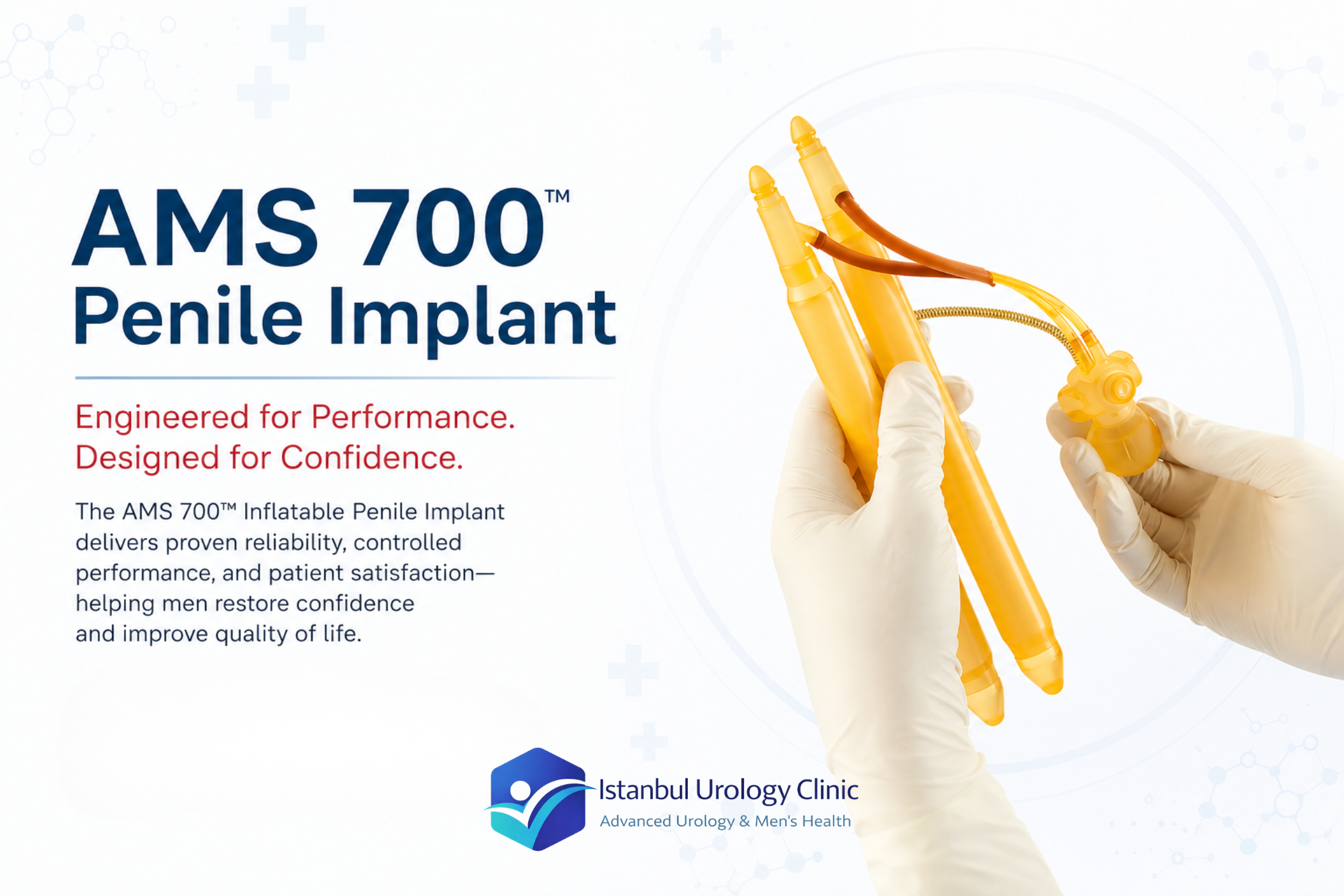
The AMS 700 was first implanted in 1973. Over 600,000 men have received one since, making it the most widely used inflatable penile implant in the history of prosthetic urology. At Istanbul Urology Clinic, we work with the full AMS 700 penile implant range, including CX, LGX, and CXR cylinders, with the TENACIO™ pump now standard in most new cases. This guide reflects what we actually see in the operating room and across long-term follow-up, not what the brochure says.
The questions patients bring to consultation are usually practical. Which cylinder fits my anatomy. How long will the device last. What does a real recovery look like. Where does AMS 700 stop being the right choice and another implant becomes the better recommendation.
- 50 Years of AMS 700: What the Data Actually Shows
- AMS 700 Penile Implant Cylinders: CX, LGX, and CXR
- The Decision Tree We Use in Consultation
- Who Is Usually Happiest With AMS 700?
- AMS 700 vs Coloplast vs Rigicon: The Quick Answer
- How the AMS 700 Hydraulic System Works
- TENACIO™: The 2023 Pump Generation
- InhibiZone™ Antibiotic Coating
- When AMS 700 Is Not the Right Choice
- Real AMS 700 Cases From Our Clinic
- Surgical Approach: What Is Specific to AMS 700
- Long-Term Performance Across 10, 15, and 20 Years
- AMS 700 Satisfaction Rates:
- Risks We Discuss With Every Candidate
- What Boston Scientific Brochures Do Not Highlight
- Pricing & Packages
- Device Authenticity, Warranty & Long-Term Records
- The Honest Takeaway
- 50 Years of AMS 700: What the Data Actually Shows
- AMS 700 Penile Implant Cylinders: CX, LGX, and CXR
- The Decision Tree We Use in Consultation
- Who Is Usually Happiest With AMS 700?
- AMS 700 vs Coloplast vs Rigicon: The Quick Answer
- How the AMS 700 Hydraulic System Works
- TENACIO™: The 2023 Pump Generation
- InhibiZone™ Antibiotic Coating
- When AMS 700 Is Not the Right Choice
- Real AMS 700 Cases From Our Clinic
- Surgical Approach: What Is Specific to AMS 700
- Long-Term Performance Across 10, 15, and 20 Years
- AMS 700 Satisfaction Rates:
- Risks We Discuss With Every Candidate
- What Boston Scientific Brochures Do Not Highlight
- Pricing & Packages
- Device Authenticity, Warranty & Long-Term Records
- The Honest Takeaway
Key Points
- Three cylinder configurations cover most anatomical scenarios: CX for standard rigidity, LGX for length-and-girth expansion, CXR for narrow or fibrotic corporal anatomy.
- The TENACIO™ pump generation, FDA approved in 2023, is now the default for diabetic patients, men with arthritis, and anyone concerned about hand strength during inflation.
- InhibiZone™ antibiotic coating combines rifampin and minocycline into the implant surface, reducing infection-related revisions in published clinical data.
- Modern AMS 700 penile implants show mechanical failure rates under 10% at 10 years, with many implants functioning reliably for 15 years or longer.
- Antibiotic-coated implants are now recognized across major urology associations as part of the modern infection-prevention standard.
- Surgery takes 60 to 90 minutes with one night of hospital observation. Intercourse is cleared at the six-week mark after device activation training.
- AMS 700 is not the right device for every patient. Coloplast Titan, Rigicon Infla10, or another implant is sometimes the stronger clinical recommendation.
50 Years of AMS 700: What the Data Actually Shows
The American Medical Systems 700 series traces back to the original three-piece inflatable concept developed by Dr. F. Brantley Scott in 1973, refined through AMS for four decades, and acquired by Boston Scientific in 2015. Each generation has carried forward the mechanical lessons of the previous one, which is why modern AMS 700 penile implants behave so predictably in long-term follow-up.
What separates AMS 700 from newer platforms is the depth of published peer-reviewed data behind it. Thousands of patients have been tracked across decades, and the numbers consistently land in the same range.
Two additional findings reinforce this data. Carson and colleagues documented that InhibiZone-coated AMS 700 implants show significantly reduced infection-related revision rates compared with non-coated devices, which is why antibiotic-coated AMS became the global standard. Henry and colleagues confirmed revision-free survival remains favorable at 15 years in published cohorts, making AMS 700 one of the few inflatable implants with documented 15-year outcome data.
When AMS 700 is recommended in consultation, the recommendation is anchored in five decades of clinical evidence.
AMS 700 Penile Implant Cylinders: CX, LGX, and CXR
The AMS 700 penile implant family is built on one shared hydraulic platform. The pump and reservoir are identical across the range; the cylinder is what changes, and that single component decides which patient anatomy the implant fits best.
| Cylinder | How It Expands | Best Suited For |
|---|---|---|
| AMS 700 CX | Girth expansion only, maximum rigidity | Standard severe ED, Peyronie’s correction cases, patients prioritizing firmness |
| AMS 700 LGX | Controlled length and girth expansion | Men with penile shortening and preserved tissue elasticity |
| AMS 700 CXR | Girth expansion only, narrow-base profile | Fibrotic corpora, narrow anatomy, revision surgery |
All three cylinders come in multiple lengths, with rear tip extenders for fine-tuning during surgery. Sizing is determined intraoperatively, not before. The decision the patient actually faces is which cylinder design, not which size.
AMS 700 CX
The Default WorkhorseStandard severe ED, Peyronie’s correction cases.
Girth only, maximum rigidity.
Will not recover lost length.
AMS 700 LGX
Length-Recovery OptionPenile shortening with preserved tissue elasticity.
Length and girth, controlled.
Tissue must still stretch on examination.
AMS 700 CXR
Narrow Anatomy SolutionFibrotic corpora, narrow anatomy, revision cases.
Girth only, narrow-base profile.
Not appropriate without measured narrow anatomy.
The Decision Tree We Use in Consultation
What This Framework Does Not Capture
No decision tree replaces the conversation during physical examination. Two patients can give identical answers and end up with different implants because of factors a flowchart cannot capture: how wide each erection chamber measures when stretched on examination, scarring patterns from prior procedures, or how the patient holds and operates a pump model during consultation.
The tree is also not a sales script. When the answer points away from AMS 700, the alternative is recommended directly. That is why the full inflatable line from three manufacturers is stocked, rather than committing to a single brand.
Who Is Usually Happiest With AMS 700?
The decision tree above explains the clinical logic. This section explains the patient outcomes. After fifteen years of placing AMS 700 penile implant, the men who consistently report the highest satisfaction fall into four recognizable profiles. If you see yourself in one of them, AMS 700 is likely the right conversation to have.
AMS 700 vs Coloplast vs Rigicon: The Quick Answer
“AMS 700 vs Coloplast Titan” and “AMS 700 vs Rigicon” are among the most common comparisons patients run before consultation. Here is the answer in the form we give it during clinical conversations.
Choose AMS 700 when your case is standard severe ED without heavy scarring inside the erection chambers, you have reliable hand function, and you value the deepest clinical evidence base of any inflatable implant.
Choose Coloplast Titan when severe scarring inside the erection chambers demands the firmest possible erection that only Bioflex, a stronger material than standard silicone, can deliver. The Titan Touch is also the better choice when significant hand weakness makes one-touch deflation a meaningful daily improvement.
Choose Rigicon Infla10 when length recovery is the priority and the AX cylinder profile fits the anatomy better than the AMS LGX, or when a younger patient values the lifetime device warranty Rigicon offers.
None of these implants is universally better. The right choice depends on anatomy and life circumstances over the next fifteen years, which is exactly what the consultation evaluates.
How the AMS 700 Hydraulic System Works
The full mechanics of three-piece inflatable implants are covered in our penile implant surgery guide. This section focuses only on what makes the AMS 700 penile implant mechanically different.
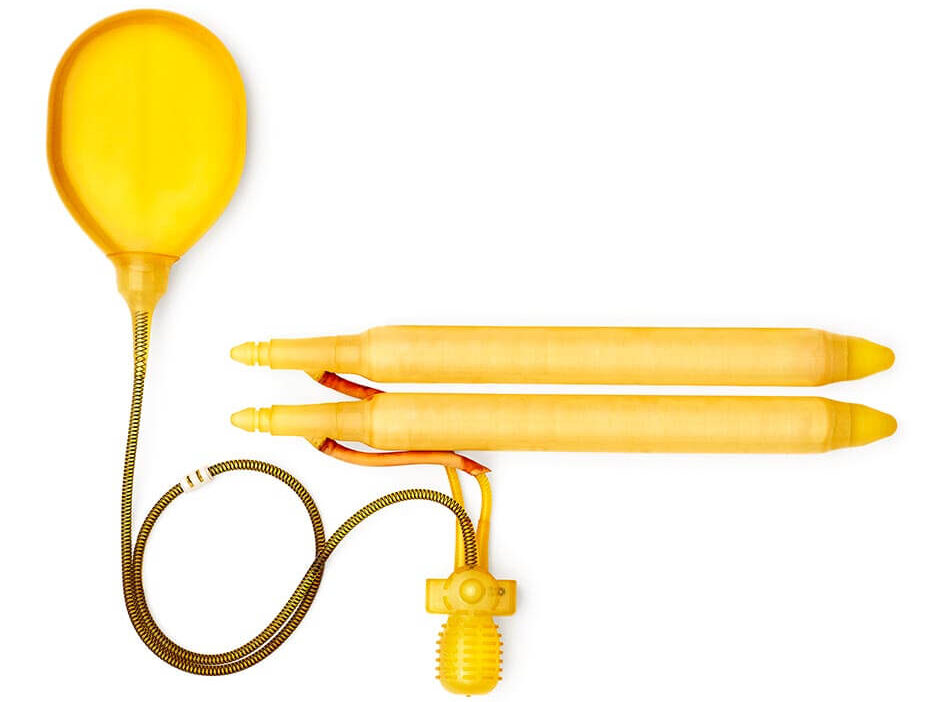
A few gentle squeezes on the scrotal pump produce a firm erection within seconds. A release button on the same pump returns the penis to its soft, natural state. The three components handling this work as follows:
| Component | Location | Function |
|---|---|---|
| Inflatable Cylinders | Inside the two erection chambers of the penis | Create firmness during inflation. The way they expand depends on the cylinder model chosen. |
| Scrotal Pump | Hidden inside the scrotum | The patient inflates and deflates the implant using this pump. The pump model placed during surgery determines how the device feels in daily use. |
| Fluid Reservoir | Behind the lower abdominal muscle | Stores the sterile saline that moves between the reservoir and cylinders. |
What separates AMS 700 mechanically from other inflatable platforms comes down to four engineering decisions refined across decades. These details rarely change a patient’s decision, but they explain why AMS 700 behaves so predictably in long-term follow-up.
TENACIO™: The 2023 Pump Generation
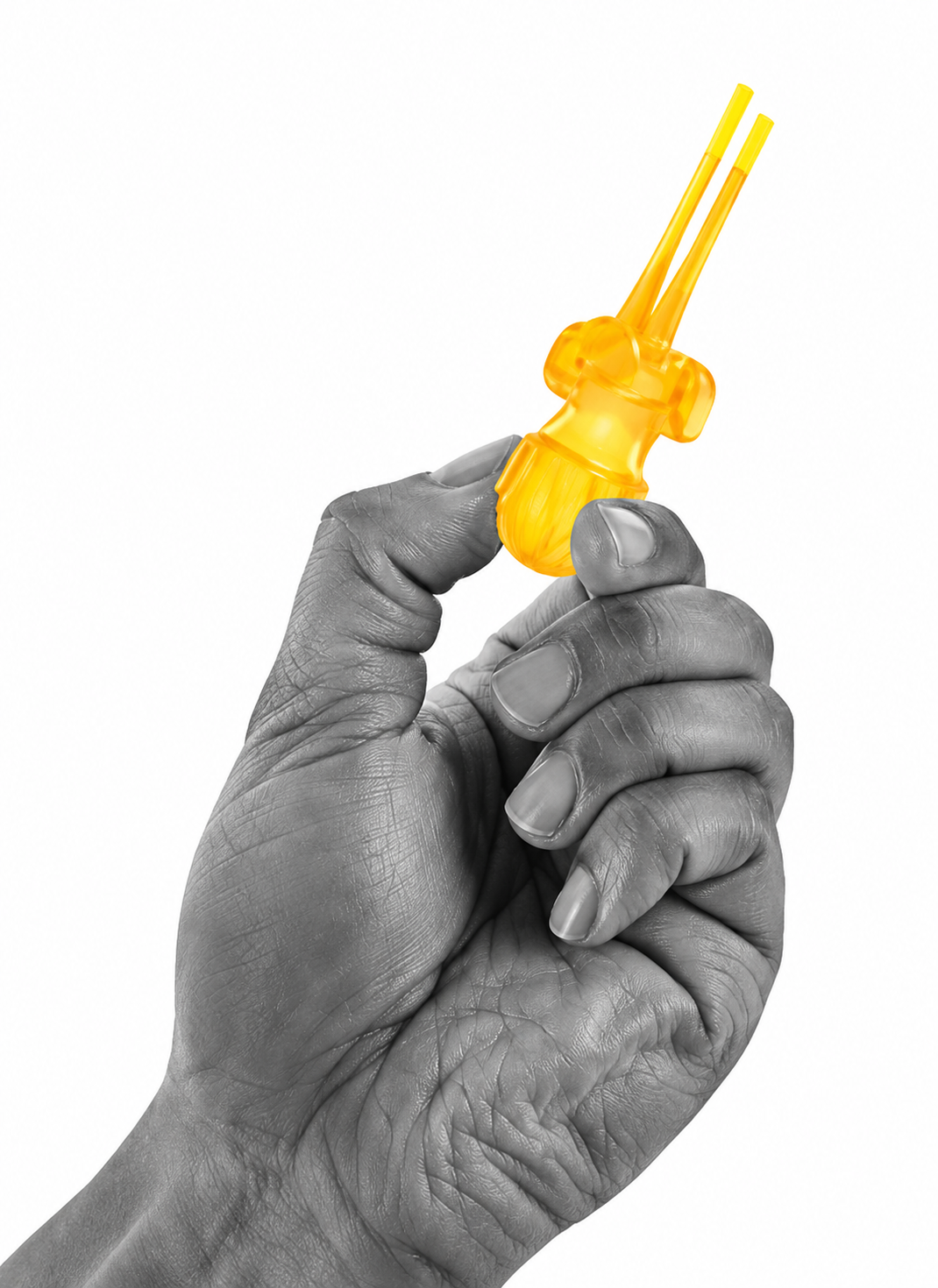 The scrotal pump placed at Istanbul Urology Clinic is the TENACIO generation, FDA approved in 2023. The cylinders, reservoir, and InhibiZone coating remain identical to earlier AMS 700 builds. The pump is the single component the patient interacts with daily for the next fifteen years, which is why the generation placed during surgery matters more than the rest of the platform suggests.
Pump selection criteria, what TENACIO changed mechanically, who benefits most, and where Coloplast Titan Touch becomes the stronger alternative are covered in the AMS 700 TENACIO pump guide. The relevant point here: pump generation is decided during consultation, not selected by the patient as an upgrade.
InhibiZone™ Antibiotic Coating
Infection has historically been the single most serious complication of penile implant surgery. When it reaches the device, the implant typically must be removed, the patient goes through a course of antibiotics without an implant in place, and a replacement surgery is performed later once the tissue has fully healed. This is why infection prevention is the top priority in modern implant surgery, not an afterthought.
InhibiZone is Boston Scientific’s response. It is a coating built into the surface of the implant at the factory, combining two antibiotics (rifampin and minocycline) directly into the silicone during manufacturing. After surgery, the antibiotics release slowly into the surrounding tissue across the first seven to ten days, which is exactly the window when most implant infections begin.
The reduction in infection-related revision rates was first documented in the Carson cohort study published in the Journal of Urology, and the finding has been replicated across multiple subsequent series.
This clinical impact is why antibiotic-coated implants became the global standard within a decade. Coated devices are now recognized across major urology associations as part of the modern infection-prevention standard, alongside strict sterile surgical protocols and intravenous antibiotics given just before and after the procedure. Every AMS 700 we place comes with InhibiZone as standard, not as an upgrade.
What InhibiZone does not do matters equally. It does not eliminate infection risk entirely, and it does not protect against infections developing years later from unrelated sources, the most common examples being bacteria entering the bloodstream during dental procedures or untreated urinary tract infections that spread. This is why preventive antibiotics are advised before dental work or other procedures long after the original implant surgery.
When AMS 700 Is Not the Right Choice
The decision tree that points toward AMS 700 also points away from it in specific situations. The honesty matters more than the recommendation, because the patient living with the wrong implant for fifteen years is the worst outcome of prosthetic urology.
Three patient profiles arrive in consultation expecting AMS 700 and leave with a different recommendation:
| Clinical Situation | Why AMS 700 Falls Short | The Better Recommendation |
|---|---|---|
| Severe corporal fibrosis or advanced Peyronie’s plaque | AMS cylinder material deforms under sustained pressure from dense scar tissue. The erection compromises before the tissue does. | Coloplast Titan — Bioflex polyurethane holds rigidity inside hostile corpora where silicone gives way. |
| Younger patient with a 20-year replacement horizon | AMS warranty structure covers mechanical failure under defined terms, not lifetime replacement. | Rigicon Infla10 — lifetime device warranty matters when the replacement window is statistically certain. |
| Prior pelvic or abdominal reconstruction making reservoir placement risky | The three-piece AMS architecture requires retropubic space that may no longer exist safely. | Rigicon Infla2P — two-piece system removes the abdominal step entirely. |
← Swipe to see full table →
For the broader brand-to-scenario mapping across all three manufacturers, see our inflatable penile implant guide, which covers the full decision logic. This article stays inside the AMS 700 platform.
Real AMS 700 Cases From Our Clinic
The three case snapshots below reflect typical AMS 700 outcomes across different patient profiles seen at Istanbul Urology Clinic. Identifying details have been removed, and clinical permission was obtained for educational use. Each case follows the same decision sequence walked through in every consultation: anatomical assessment, device selection, surgical execution, and what the patient actually reported at follow-up.
Patient profile: 58 years old, radical prostatectomy four years prior for localized prostate cancer, oncologically stable. Failed maximum-dose ED tablets (Viagra, Cialis, Levitra) followed by 18 months of penile injections, with the injections gradually losing effect. Penile rehabilitation incomplete due to inconsistent compliance during the first postoperative year.
Clinical reasoning: Standard severe ED with preserved corporal anatomy on examination. No fibrosis, no scarring from prior pelvic procedures beyond the prostatectomy itself, normal hand function, no diabetes. The case fit AMS 700 CX cleanly with no anatomical factor pushing toward an alternative cylinder.
Device selected: AMS 700 CX with TENACIO pump, 18 cm cylinders, Conceal low-profile reservoir.
Outcome at 12 months: Full restoration of on-demand erectile function. Pump operation mastered by week six. No infection, no mechanical issues, no revision required. Patient reported intercourse frequency returning to pre-cancer baseline by month three. Partner satisfaction confirmed at follow-up.
Patient profile: 64 years old, type 2 diabetes for 22 years, HbA1c 7.4 on optimized therapy. Mild rheumatoid arthritis affecting both hands with measurable grip-strength reduction. Severe ED unresponsive to PDE5 inhibitors and reluctant to continue intracavernosal injections due to needle anxiety and finger dexterity limitations.
Clinical reasoning: The diabetes and hand function profile pointed directly at the TENACIO pump generation. We considered Coloplast Titan Touch as the alternative, but the patient demonstrated adequate pump squeeze on the TENACIO model during in-consultation testing. Corporal anatomy on examination supported standard CX cylinders without need for narrow-base configuration.
Device selected: AMS 700 CX with TENACIO pump, 18 cm cylinders, Conceal reservoir.
Outcome at 9 months: Independent pump operation confirmed at week four, ahead of typical timeline. No learning-curve struggles reported. Glycemic control remained stable through surgery and recovery with no wound healing complications. Patient specifically noted the deflation step was easier than he had anticipated based on online forum descriptions of older AMS pumps.
Patient profile: 47 years old, Peyronie's disease with 40-degree dorsal curvature stable for 14 months, approximately 2 cm length loss compared with pre-Peyronie's baseline measurement. ED component superimposed on the curvature, not responsive to PDE5 inhibitors. Tissue elasticity reasonably preserved on stretch examination despite the plaque.
Clinical reasoning: The length concern and preserved elasticity pointed to AMS 700 LGX as the cylinder of choice. Simultaneous curvature correction was planned during the same operation using manual modeling against the inflated implant. Rigicon Infla10 AX was considered as the alternative, but LGX fit the corporal width on intraoperative sizing.
Device selected: AMS 700 LGX with TENACIO pump, 21 cm cylinders, Conceal reservoir, intraoperative modeling for curvature correction.
Outcome at 9 months: Residual curvature reduced to under 10 degrees, well within functional range. Gradual length recovery of approximately 1.5 cm documented at the 9-month visit with consistent daily cycling protocol followed since week eight. Patient continues cycling for ongoing expansion benefit.
Surgical Approach: What Is Specific to AMS 700
The general surgical principles of inflatable penile implant placement are covered in the penile implant surgery guide. This section focuses only on what is specific to the AMS 700 platform.
AMS Sizing Protocol
Boston Scientific provides a dedicated set of sizing instruments designed specifically for the AMS 700 cylinder shape. The Furlow inserter and AMS measuring tools allow precise measurement inside each erection chamber during surgery, before final cylinder selection.
The left and right chambers are measured separately because they are often slightly different lengths in real patients, particularly in men with Peyronie’s disease and post-prostatectomy patients whose erection chambers have not been fully used for years. Cylinder length is chosen to match the shorter side, to avoid uneven pressure on the tip of the penis after device activation.
Choosing the Reservoir: Conceal vs Spherical 100cc
The Conceal low-profile reservoir is the default for slim patients and any case where the patient might otherwise feel the reservoir through the abdominal wall after surgery. The Spherical 100cc reservoir holds more fluid and produces slightly fuller cylinder expansion during inflation, making it the choice when maximum girth is the priority for that patient.
Pump Placement
The pump sits in a small pocket created inside the scrotum, just under the skin layer. Depth has to be exactly right. Too shallow and the pump becomes visually prominent. Too deep and the patient struggles to locate it during inflation. The TENACIO pump generation has reduced variability in this step considerably compared with older MS Pump and Tactile Pump models.
Surgical standards followed for penile implant placement are detailed in the EAU Guidelines on Male Sexual and Reproductive Health, published by the European Association of Urology.
Long-Term Performance Across 10, 15, and 20 Years
~4% Mechanical Failure
Early failures are rare. The implant performs as designed during the first half-decade.
7–13% Failure Rate
Benchmark figure across long-term studies. Cylinder and tubing wear appear in a small subset.
20–30% Failure Rate
Cohort data thins here, but published series suggest the majority of implants remain functional.
Case-by-Case
Documented AMS 700 implants still functioning at 20 years exist as individual outcomes, not population averages.
What Actually Affects Longevity
Individual outcomes depend on factors outside the surgery. Frequent cycling extends the working life of the hydraulic system by keeping fluid moving. Poorly controlled diabetes raises infection risk indefinitely. Significant weight gain changes how the device cycles. Smoking impacts tissue perfusion and accelerates corporal compliance loss.
The mechanical components are engineered to last. The variable is the body around them.
When Mechanical Failure Eventually Occurs
If a hydraulic failure happens after a decade or more, revision is not starting from zero. The corporal tissue from the original surgery is largely preserved, and usually one component is replaced — a leaking cylinder or worn tubing — not the whole system. Full device replacement falls under Boston Scientific’s warranty.
Full revision logistics are covered in the penile implant revision surgery guide.
AMS 700 Satisfaction Rates:
Mechanical reliability and infection rates are the surgeon’s metrics. Satisfaction is the patient’s. The two do not always move together, and the published figures matter as much as the durability data.
What the numbers do not show is the adjustment period. The first two to three months after activation are a learning phase, not a final assessment. Patients who report frustration at the three-month mark frequently move into the satisfaction range by month six, once confidence with the pump, the new sensation pattern, and intimacy timing catches up with mechanical recovery.
Why Partner Satisfaction Matters More Than Patients Realize
The number patients usually focus on is their own. The number watched more closely in clinic is the partner’s. Long-term implant satisfaction is rarely sustained when one side of the relationship is satisfied and the other is not. The 88 to 92% partner range across AMS 700 cohorts reflects what the device gets right that older inflatable platforms did not: a genuinely soft flaccid state, inflation that feels reasonably natural, and an erection that holds reliably through intercourse without sudden softening.
The Regret Question
Under 5% of patients in long-term follow-up report regret about an inflatable penile implant. That small group typically shares one of two profiles: preoperative expectations no implant could have met, or a first-year complication trajectory (infection, malposition, mechanical failure) that shaped the entire experience. Anatomical fit, honest counseling, and surgical execution are what keep that figure where it is.
Risks We Discuss With Every Candidate
Every penile implant procedure carries surgical risk. The numbers below are the honest figures shared during consultation, not the polished ones that appear in marketing material. Understanding these risks is part of informed consent before any decision is finalized.
| Risk | Approximate Rate | How It Is Minimized |
|---|---|---|
| Infection | 1 to 3% (lower with InhibiZone, ~50% relative reduction) | Antibiotic-coated implant, antiseptic surgical wash, no-touch protocol, IV antibiotics before and after, limited OR traffic. |
| Mechanical failure | Under 5% within first 5 years | Proper cylinder sizing, correct fluid volume, careful tubing routing, manufacturer quality control. |
| Implant erosion through tissue | Under 2% | Gentle opening of erection chambers, accurate cylinder sizing, avoiding oversized cylinders, careful glans protection. |
| Unwanted self-inflation | Rare with built-in Lock-Out valve | Reservoir position and fluid volume verified during surgery. |
| Persistent pain | Under 5% temporary, under 1% long-lasting | Multi-modal pain control, gentle surgical handling, structured recovery protocol. |
| Palpable reservoir | Varies, more common in slim patients | Conceal low-profile reservoir, placed correctly behind the abdominal muscle. |
Why Some Patients Carry Higher Risk
Poorly controlled diabetes, active smoking at the time of surgery, a weakened immune system (from medications or chronic illness), previous radiation treatment to the pelvic area for cancer, and revision cases all raise the baseline infection rate measurably. Hand strength and finger control affect how well the patient operates the device after activation. Body type and amount of abdominal fat affect reservoir placement and how easy it is to feel the reservoir later. Each factor is assessed during the preoperative workup, and patients are told honestly when they sit in a higher-risk category.
What Patients Asking About Worst-Case Scenarios Are Told
The worst-case scenario with a modern AMS 700 placed in a well-prepared patient is not catastrophic. It is inconvenient. A serious infection requires device removal and a delayed replacement. A mechanical failure requires revision surgery. Erosion requires a repair procedure. None of these outcomes are common, and none leave the patient in a worse position than the untreated erectile dysfunction that brought them to consultation.
The risk equation favors implantation in carefully selected candidates, which is why penile implant surgery is the recommended treatment for severe erectile dysfunction that no longer responds to tablets or injections, according to the American Urological Association (AUA) and the European Association of Urology (EAU).
What Boston Scientific Brochures Do Not Highlight
Manufacturer brochures and most clinic websites describe AMS 700 as a device patients receive and forget. Three realities of living with an inflatable implant rarely appear in promotional material.

The Learning Curve Is Pump-Specific
Every inflatable implant requires a learning period after activation. AMS 700 differs because the experience depends heavily on which pump generation was placed. Patients with the older MS Pump or Tactile Pump models typically needed 3 to 4 weeks before inflation felt natural, with many struggling to locate the deflation valve confidently for longer.
The TENACIO pump generation, FDA approved in 2023 and now the default, has shortened this window meaningfully in follow-up. Pump mechanics and first-weeks behavior are covered in the AMS 700 TENACIO pump guide.
At Istanbul Urology Clinic, every patient receives TENACIO unless the case requires otherwise, which means the learning curve described in older patient forums and Reddit threads does not apply.
Reservoir Palpability in Slim Patients
In patients with low body fat, particularly slim athletic men, the 100cc spherical reservoir may be palpable through the lower abdominal wall when the implant is deflated. Partners rarely notice it during intimacy; the patient can feel it on intentional palpation. The Conceal low-profile reservoir reduces this, which is why it is the default for slim patients.
The Glans Will Not Fully Engorge
This is the single most underdiscussed reality of inflatable implants. The implant fills the corpora cavernosa, but the glans sits in a separate area the implant does not reach.
During an implant-driven erection, the shaft becomes firm and rigid while the glans remains in its resting state, without the swelling and reddening of a natural erection. Many patients adapt within the first months. Some find it cosmetically noticeable.
Pricing & Packages
AMS 700 treatment at Istanbul Urology Clinic is offered as an all-inclusive international patient package covering the device, surgical fees, anesthesia, hospital stay, hotel accommodation, airport transfers, postoperative medications, and follow-up coordination. Cylinder model (CX, LGX, CXR), reservoir choice (Conceal vs Spherical 100cc), and case complexity move the final figure within a defined range.
The full breakdown of what each package includes, and how Istanbul pricing compares with Western Europe and the United States, is covered in the penile implant cost in Turkey guide.
Device Authenticity, Warranty & Long-Term Records
Four practical concerns come up in nearly every AMS 700 consultation, and all four deserve direct answers.
Device Authenticity and Traceability
Every AMS 700 placed at Istanbul Urology Clinic arrives sealed directly from Boston Scientific through their authorized distribution channel. The packaging carries a manufacturer lot number, a unique serial number, and tamper-evident seals that remain intact until the implant is opened in the operating room. The lot number is recorded in the patient’s surgical file and registered with Boston Scientific in the patient’s name.
This matters because penile implant counterfeits exist in some markets. Patients who later need revision surgery anywhere will be asked for proof of device origin, and without it, the conversation with the new surgeon starts at a disadvantage.
How the International Warranty Works
The Boston Scientific manufacturer warranty for AMS 700 applies internationally, not only in the country of implantation. If a mechanical failure occurs years later and the patient is living elsewhere, Boston Scientific honors the warranty terms directly with the treating surgeon at the new location. There is no need to return to Istanbul for warranty coverage.
The warranty covers the device itself. Surgical fees for revision in another country depend on the local healthcare system or insurance arrangement.
The Patient Identification Card
Boston Scientific issues a patient identification card for every AMS 700. It lists the device model, the implantation date, the lot and serial numbers, and the implanting clinic. The card serves three practical functions: it confirms MRI safety status for future imaging, explains the implant to airport security if body scanners detect the components, and provides any future urologist with the exact device specifications needed for revision planning.
Revision Planning for the Long Term
Modern AMS 700 implants are designed for a working lifespan measured in decades, but eventual revision remains realistic. The lot number, operative note, and device specifications provided at discharge allow any qualified prosthetic urologist anywhere to plan a future revision accurately. The corporal tissue prepared during the original surgery is preserved during revision, making the second procedure considerably simpler than the first.
Frequently Asked Questions
The AMS 700 is a three-piece system with cylinders, a scrotal pump, and an abdominal reservoir. The Ambicor is a two-piece variant from Boston Scientific where the fluid storage is built into the cylinder ends rather than placed separately in the abdomen. The trade-off is meaningful. The Ambicor avoids the abdominal step entirely, which simplifies surgery in patients with extensive pelvic scarring, but the flaccid state is firmer and the erection is shorter and less rigid than the AMS 700 delivers. We use Ambicor only in selective revision cases where the retropubic space is hostile, and even then the Rigicon Infla2P is often the stronger two-piece alternative for that scenario.
The 100cc reservoir is engineered to provide enough fluid volume for complete cylinder expansion across all AMS 700 cylinder sizes, including the longest 21cm configurations. Smaller reservoirs would limit the rigidity that the larger cylinders can achieve. The Conceal low-profile design houses the same 100cc volume in a flattened shape that sits lower in the retropubic space, reducing palpability in slim patients without sacrificing fluid capacity. The fluid itself is sterile saline, and the design intentionally over-provisions volume so that even if minor fluid loss occurs over years, the implant retains full inflation capacity.
InhibiZone combines two antibiotics, rifampin and minocycline, bonded directly into the silicone surface of the cylinders and pump during manufacturing. The coating releases gradually during the first 7 to 10 days after implantation, when the infection risk window is highest. Patients with known allergies to either antibiotic, particularly tetracyclines (the minocycline family) or rifamycins (the rifampin family), cannot receive an InhibiZone-coated AMS 700. In those cases, the non-coated AMS 700 is implanted with enhanced perioperative antibiotic protocols compensating for the absent coating. Allergy review is part of the standard pre-operative workup, and we ask about every antibiotic reaction history before finalizing the device choice.
The AMS 700 produces no audible sound during normal inflation or deflation. The hydraulic system moves fluid silently through internal tubing, and the pump squeeze itself is muscular rather than mechanical. Some patients describe feeling a subtle tactile sensation as the cylinders fill, but there is no clicking, whirring, or pumping noise. The only situation where any sensation becomes noticeable is during the deflation step, where releasing the valve creates a brief soft hiss that is felt internally rather than heard externally. Partners do not perceive any sound during intimacy, and the device operates with complete acoustic privacy.
The cylinder length is determined intraoperatively using Boston Scientific's dedicated sizing instruments and locked in during the original implantation. Rear tip extenders, available in 0.5cm increments up to 3.0cm, allow fine adjustment of total cylinder length during surgery. Once the implant is closed and healed, the cylinder length itself cannot be changed without a surgical revision. If a length mismatch becomes clear after recovery, typically discovered during the activation visit, revision surgery using shorter or longer cylinders is the only solution. This is one of the reasons we measure both corpora separately and take time during the sizing step rather than estimating from external penile length.
Boston Scientific issues a wallet-sized patient identification card after every AMS 700 implantation, similar in size and format to a credit card. It lists the device model (CX, LGX, or CXR), the implantation date, the cylinder length, the pump type, the lot number, the serial number, and the implanting clinic information. The card also includes the MR Conditional safety parameters specific to the device. Patients should carry it in their wallet alongside identification documents, present it during any medical imaging (MRI in particular), and show it to airport security if questioned about the body scanner result. For long-term care, a digital photograph of both sides stored on a phone serves as a backup if the physical card is misplaced.
Yes, in most revision cases. The corporal tissue that was prepared during the original implantation is preserved during device removal, which means the new AMS 700 can usually be placed through the original incision pattern with shorter operating time than the first surgery. The cylinder selection may shift toward the CXR model with narrower cylinders if fibrosis developed at the prior implant site, or the CX may still fit if the corpora remained pliable. Reservoir reuse is not standard practice; a fresh reservoir is placed during revision. Boston Scientific's warranty program supports device replacement under specific conditions, and the documentation from the original surgery is essential for warranty eligibility, which is one of the reasons we emphasize keeping the patient identification card and operative records long-term.
The TENACIO pump (FDA approved 2023) replaced the older MS Pump and Tactile Pump generations with a redesigned bulb geometry, raised tactile deflation button, and faster internal refill response. The mechanical differences between the three pump generations, who benefits most, and how TENACIO compares with the Coloplast Titan Touch are covered in detail in our AMS 700 TENACIO pump guide.
The Honest Takeaway
AMS 700 is not the best inflatable penile implant on the market. It is the most studied. Five decades of clinical data, six hundred thousand implantations, and continuous engineering refinement from the MS Pump through the Tactile Pump to the TENACIO generation have produced a device whose long-term behavior can be predicted with rare confidence.
The honest answer to why AMS 700 is used: what to expect at year ten, year fifteen, and year twenty is known in a way newer devices cannot yet promise. That predictability is what gets chosen, not a brand.
The decision is not whether AMS 700 is a good implant. It is whether AMS 700 is the right implant for a specific anatomy, history, and set of expectations. That answer comes from examination, not from articles. Each case is reviewed individually before a device is recommended.